Plascene consistently produces premium-quality plastic products for the U.S. market.

Hotline

888-848-6388

Author: Content

Resin identification code: a triangle with the number 1 moulded into the base of a clear PET bottle

The Triangle on the Bottom of Your Bottle Doesn’t Mean What You Think

Resin identification code: a triangle with the number 1 moulded into the base of a clear PET bottle
The resin identification code moulded into the base of a PET bottle. Illustrative image.

Turn over almost any plastic bottle and you will find a small triangle with a number inside it. Most people read it as a promise. This is recyclable, put it in the bin.

It is not a promise, and it never was. The standard that defines the symbol says so in plain language. The codes are not recycling codes, and the presence of one does not mean the item is recycled or that any system exists to process it.

For a brand, this is not a point of pedantry. The gap between what the resin identification code says and what people think it says has become an expensive place to sit.

What the resin identification code actually tells you

Chart of the 7 resin identification codes: the former chasing-arrows marks next to the current solid-triangle marks, with the polymer each number names
The 7 resin identification codes, old mark and current mark. The number names the plastic, nothing more.

The symbol is a Resin Identification Code, now maintained as ASTM D7611. Its job is narrow and useful. It tells a sorter what polymer family the item is made from. A 1 is PET, a 2 is HDPE, and so on through 7 categories.

That is the whole function. It is a material label written for the people who handle the material downstream, not an environmental claim written for the shopper.

The confusion has a specific origin. The original code sat inside a triangle of chasing arrows borrowed from the universal recycling symbol. Consumers read the arrows rather than the number and concluded the arrows meant recyclable. ASTM later changed the surround to a plain bold triangle to break that association. Decades of old moulds and old habits mean both versions are still in circulation.

So the number identifies the plastic. It says nothing about whether this particular package, in this particular town, will actually be recycled.

The 4 things that decide whether a package is really recycled

Whether a bottle becomes another bottle depends on a chain. The resin identification code is only the first link in it.

4 gates after the resin identification code: collected, sorted, compatible components, and a buyer for the output
A package has to clear all 4 gates. The code only gets it to the start line.

Is it collected? Kerbside programs differ enormously. A package that is technically recyclable in a laboratory sense is landfill if the local program does not accept the format.

Can it be sorted? Sorting facilities separate by material, shape and optical signature. A clear PET bottle is easy to identify. The same bottle in a dark pigment can read as invisible to an optical sorter and fall out with the residue. A full-body sleeve label can make a PET bottle look like something else entirely.

Workers sorting mixed used PET bottles on a recycling conveyor belt
Sorting is where colour, labels and shape decide whether a bottle stays in the PET stream.

Do the components match? A PET bottle with a closure, liner and label that are not compatible is a mixed-material object. Each incompatible part either has to be removed somewhere in the process, or it contaminates the bale. This is the case for mono-material packaging in one sentence.

Is there a buyer? Recycling is a market. Material is only recycled if someone will pay for the output. Clear PET has an established end market because it can go back into bottles. Several other formats do not have a reliable one.

Put 2 packages carrying an identical number 1 side by side and they can have completely different fates. The code tells you the polymer. The design decides the outcome.

Why the resin identification code is turning into a commercial question

For years the gap between symbol and reality was mostly a consumer-education problem. That is changing.

Under Extended Producer Responsibility programs, including California’s SB 54 and the state laws following it, producers of packaging report what they put on the market and pay into the system. These programs are generally designed so that fees reflect how recyclable a package actually is. A design that sorts cleanly and has an end market is treated differently from one that does not. The exact fee mechanics vary by program and are still being set, but the direction is consistent. Recyclability becomes a line item rather than a claim on a label.

That shifts the question. Not does my package carry the right symbol, but does my package survive the sorting line and find a buyer. The answer moves out of marketing and into packaging engineering, which is where Plascene’s approach to sustainability starts.

There are 3 questions worth asking before the artwork is signed off:

  • If an optical sorter looks at this package, what does it see? The bottle, or the sleeve?
  • Are the closure and liner compatible with the body, or do they have to be separated somewhere?
  • Is there an actual end market for this material in this format, today?

The triangle on the bottom will not answer any of them.

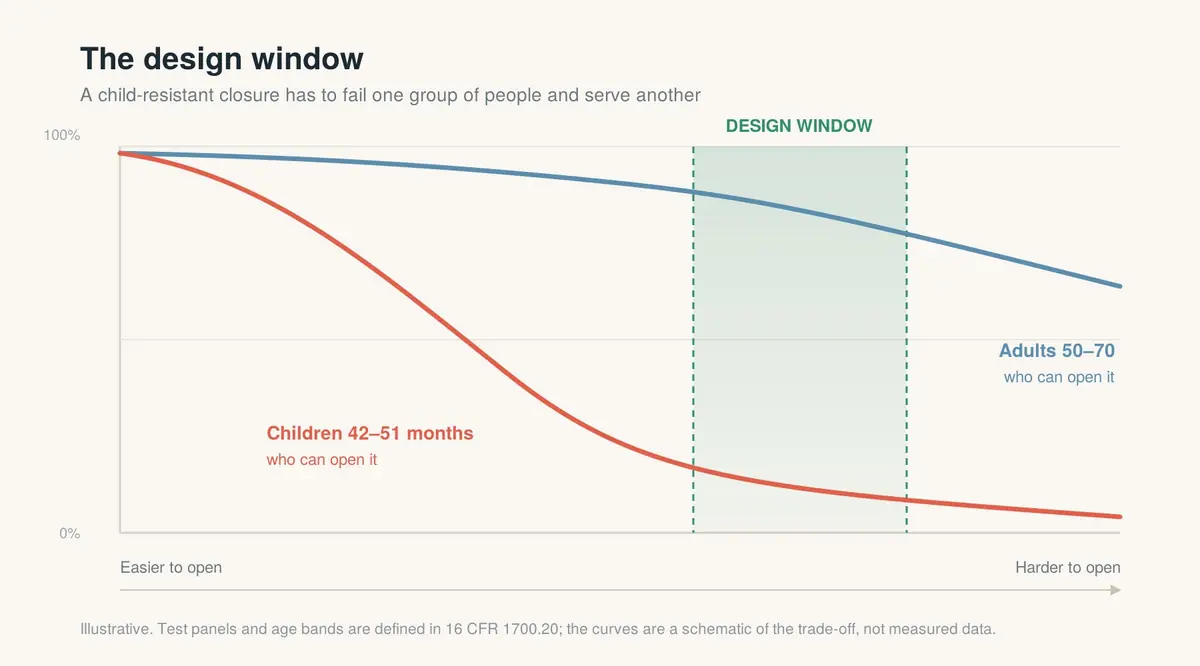
The design window: a child-resistant closure has to fail children aged 42 to 51 months and serve adults aged 50 to 70

Why Child-Resistant Caps Are Hard to Open, and Why That’s the Point

Everyone has stood at a kitchen counter pressing down and turning a pill bottle cap that refuses to move. Child-resistant caps are built to do exactly that.

Here is what most people never learn. That difficulty is not a side effect of the design. It is the specification, and it was measured on real children and real older adults, under a test protocol written into U.S. federal regulation.

Once you know how child-resistant caps are tested, a lot of pharmaceutical and supplement packaging starts to make sense.

How child-resistant caps are tested: 2 panels of real people

The U.S. protocol for child-resistant packaging, 16 CFR 1700.20, puts a package in front of 2 groups of testers who want opposite things from it.

Child-resistant caps design window: the closure has to fail children aged 42 to 51 months and serve adults aged 50 to 70
The 2 panels pull in opposite directions. The workable design sits in the gap between them. Illustrative: the curves are a schematic of the trade-off, not measured data.

The children come first. Panels of 50 at a time, up to 200 in total, aged 42 to 51 months. That is roughly 3½ to 4¼ years old. The age mix is fixed: 30% at 42 to 44 months, 40% at 45 to 48 months, 30% at 49 to 51 months. Each child gets 2 periods of 5 minutes, 10 minutes in all. The regulation sets exactly how many may succeed before the package fails.

Then come the older adults. A panel of 100, aged 50 to 70, with its own fixed spread: a quarter aged 50 to 54, a quarter 55 to 59, and half aged 60 to 70. Each has up to 5 minutes to open and close the package, then a second package to open and properly resecure within 1 minute.

That second panel is the part almost nobody knows about, and it is the more interesting half. Designing a cap that defeats a 4-year-old is trivial. Weld it shut. The regulation does not allow that. The same package has to be opened, and correctly closed again, by someone in their late sixties, under time pressure, on camera.

How the child-resistant caps test actually runs

Child panel Senior adult panel
Who Up to 200 children, in groups of 50, aged 42 to 51 months 100 adults aged 50 to 70, tested one at a time
Age mix 30% / 40% / 30% across 3 bands 25% / 25% / 50% across 3 bands
Time 2 periods of 5 minutes, 10 minutes total 5 minutes to open and close, then 1 minute to open and resecure a second package
Objective Must not get in Must get in, and close it again

The same package has to fail one stopwatch and pass the other. The design target is a narrow window between 2 populations whose hand strength and dexterity overlap more than you would expect.

Child-resistant caps are a trade-off, not a feature

From those 2 panels, 3 things follow, and all 3 matter to anyone specifying a package.

Child resistance belongs to the whole package, not the cap. The protocol tests a closed package: container, closure and liner together. A bottle on its own is not child-resistant. A bottle with a particular closure and liner, tested as a unit, either passes or it does not. Swap the liner or change the neck finish and the result can change. A supplier can tell you the thread finish is a standard platform. Only testing on the finished package answers the actual question.

Every gain on one panel costs you on the other. Make the push-and-turn stiffer and fewer children get in. So do fewer 68-year-olds. The engineering work is not making the cap hard. It is finding the window where one population is reliably excluded and the other is reliably not. That window is narrow, which is why child-resistant caps have converged on a handful of mechanisms instead of multiplying.

Usability is a safety outcome. When a package is too hard for the person who actually needs the medicine, the workaround is to leave it open on the counter, or to decant into something unlabelled. Both defeat the purpose. The senior adult panel exists because a package that only passes the child test is not a safe package.

What this means if you are specifying packaging

For a brand or a contract packer buying child-resistant caps, the takeaways are short.

Treat child resistance as a property of a tested combination, and ask for the test report on the exact container, closure and liner you intend to ship. Remember that a change you think of as cosmetic, a different liner or a slightly different neck, may put you outside the tested configuration. And ask the usability question alongside the safety question: who opens this every day, and can they close it again properly?

If you are sourcing PET jars for supplements and OTC products, start the closure conversation at the same time as the bottle conversation. The 2 are tested together, so they should be chosen together.

The next time one of these child-resistant caps fights back, it is worth remembering what it is doing. It sits inside a window defined by 2 panels of real people, one of whom it must keep out and one of whom it must let in.

SupplySide Global 2026 – Let’s build packaging that’s ready for 2027

Plascene will exhibit at SupplySide Global 2026 in Las Vegas. You’ll find us at Booth #7354, Mandalay Bay, during all three expo hall days, October 28 to 30, 2026.

SupplySide is where supplement, food and beverage brands come to source ingredients. Many of them fly home with a finished formula and no confirmed container. We think that order is backwards. If you’re launching or reformulating a SKU for 2027, the jar matters as much as the ingredients. Its neck finish, closure fit and pallet count shape your fill line, your freight bill and the material data you’ll owe under state EPR programs.

Plascene SSG2026 Banner Website@2x

What you’ll find at the booth

The booth shows our stock range for supplement, food and beverage brands: jars for capsules and powders, wide-mouth containers for bulk and dry goods, and bottles for cold-pressed juice. The samples are there to pick up and test against your closure, not just to look at.

If you already have a container in mind, bring the spec sheet. We’ll check it against your cap and fill line and talk lead time before you leave.


Plascene stock PET jars in clear, tinted and opaque finishes, shown for SupplySide Global 2026

Three conversations worth having

Recycled content you can document. Our rPET comes through a closed bottle-to-bottle loop. It’s traced from recycled resin to the finished jar. Ask us what material data we can hand your compliance team. Ask us, too, which clearance questions you should put to any rPET supplier, ourselves included. A buyer who asks that question early avoids an awkward one from legal later.

EPR data before the fee arrives. Several states, including California, Oregon, Colorado and Washington, are building or already running producer responsibility programs. These programs charge brand owners according to the packaging they put on the market. The fee depends on data your supplier controls: resin type, recycled content, weight per unit. Most packaging contracts don’t require a supplier to provide any of it. We’ll show you what to ask for.

Lead time you can plan around. We blow-mold in Oxnard, California, with typical lead times of 2 to 4 weeks. Every bottle passes 100% inspection on a Gawis4D system, with AI in-line cameras on the line. For a brand filling to a retail launch date, those two numbers matter more than a fraction of a cent on unit price.

Book a time before the show

The expo floor gets loud by mid-morning. A scheduled 20 minutes gets you more than a walk-up conversation. Email info@plascene.com or call +1-888-848-6388 with your SKU, annual volume and target fill date, and we’ll come to the meeting with options already pulled.

Book a meeting at Booth #7354

See you at Booth #7354.

SupplySide Global 2026 takes place at Mandalay Bay, Las Vegas. Education sessions run October 26 to 30; the expo hall is open October 28 to 30. Event details: supplysideglobal.com.

The Clear Advantage: Plascene’s Round PET Coldpress Juice Bottles (12 oz & 16 oz)

For cold-pressed juice and HPP beverage brands, the bottle is not just a container — it is part of the process. It has to survive high-pressure processing, protect flavor and nutrients, look premium on the shelf, and satisfy a tightening set of U.S. sustainability rules. Plascene’s Round PET Coldpress Juice Bottles are engineered for exactly that intersection of performance, presentation, and sustainability-readiness.

Manufactured in Oxnard, California, this line comes in the two everyday retail sizes that move the most volume — 12 oz and 16 oz — with each size offered in two production references so brands can match an existing fill line and cap-tooling setup. Here’s a closer look at both — and where each one fits.

Built for the way cold-pressed juice actually moves

  • HPP resilience. High-Pressure Processing compresses a bottle by roughly 15% before it rebounds — an unforgiving test for low-quality plastic. The round profile distributes that pressure evenly across 360 degrees, reducing stress concentration and helping the bottle return to shape without permanent paneling.
  • 38 mm tamper-evident security. The 38 mm TE neck finish keeps the closure fully seated under pressure, protecting seal integrity from the fill line to the final pour.
  • Glass-like clarity. PET delivers the premium, shelf-ready transparency consumers associate with freshness — without the weight, shrinkage, or breakage risk of glass.
  • rPET and recyclability. Each bottle is designed to be 100% recyclable, with recycled-content (rPET) options that help brands get ahead of California SB 54 and other Extended Producer Responsibility programs — before customers even ask.

The lineup: two sizes, two mold references each

12 oz Round Coldpress

A single-serve workhorse for cold-pressed juice, functional waters, and grab-and-go smoothies. The 12 oz round pairs a compact footprint with a clean, label-friendly panel — ideal for high-count shelf sets where facings matter. It’s produced from two mold references, so you can align with your preform, weight target, or cap-tooling program — or standardize a 12 oz SKU across multiple co-packers.

16 oz Round Coldpress

The 16 oz round is the retail standard for premium single-serve juice and larger functional beverages — giving your label more real estate while keeping the same round, HPP-friendly geometry. It’s available from two mold references, handy for matching an existing fill line or running the format across multiple facilities without re-tooling.

Both sizes share the 38 mm tamper-evident neck finish, so a single cap and closure program can serve your entire coldpress range. Bottles and closures are supplied separately, giving you the flexibility to select the exact tamper-evident cap that fits your fill and label strategy. Exact dimensions and weight per mold reference are confirmed at sample/quote stage.

Specifications at a glance

Attribute 12 oz Round Coldpress 16 oz Round Coldpress
Capacity 12 oz (≈ 355 ml) 16 oz (≈ 473 ml)
Shape / style Round Round
Neck finish 38 mm Tamper-Evident 38 mm Tamper-Evident
Material PET · rPET option PET · rPET option
HPP-compatible Yes Yes
Recyclability 100% recyclable 100% recyclable
Closure 38 mm TE, sold separately 38 mm TE, sold separately
Mold references 750 · P0952 P0751 · P0953
Height / weight On request On request
Best suited for Premium single-serve juice, functional beverages, high-count shelf sets Larger single-serve or value format, more label surface, step-up SKU

Exact height, base weight, and preform data per mold reference are confirmed at sample/quote stage. Request a sample to verify fit on your line.

Which size for which product?

  • Choose 12 oz for premium single-serve juices, functional beverages, and shelf sets where a slim, high-count facing matters.
  • Choose 16 oz for a larger single-serve or value format, more label surface for brand storytelling, or a step-up SKU alongside your 12 oz line.

Running both sizes on one 38 mm closure system keeps procurement simple and your shelf presentation consistent.

Need it customized? We build at wholesale scale

These stock references are ready-made starting points — but they aren’t your only options. For brands that want a distinct shelf presence, Plascene also produces custom work: custom colors and tints, tailored rPET content, specialty decoration, and fully custom shapes on a dedicated (private) mold.

Customization in PET packaging is a wholesale conversation, and the minimum order quantity (MOQ) scales with how far you take it:

  • Stock references (like the ones above) are available in standard case and pallet quantities — the lowest commitment and the fastest path to market.
  • Custom color, tint, rPET blend, or decoration typically starts in the tens of thousands of units per run (commonly around 10,000–50,000), because the line has to be set up, purged, and dedicated to your spec.
  • A private (custom) mold — a unique bottle shape only your brand can use — is the biggest step. Because tooling is amortized across the run, dedicated-mold programs generally make sense at higher volumes, often in the 50,000–100,000+ unit range.

These are industry-typical guideposts, not fixed rules — actual MOQ depends on the bottle, the closure, the decoration, and your production schedule, and each can carry its own minimum. With domestic tooling and production in California, Plascene can scope a custom program and confirm exact MOQ, mold lead time, and pricing for your specific project. Request a quote to start the conversation.

A U.S. supply partner — not just a bottle vendor

Packaging decisions increasingly hinge on more than unit price. With domestic production in California, Plascene offers competitive lead times, closer collaboration on custom work, and a supply chain built to keep moving when demand tightens. For brands navigating SB 54 and the broader shift to recycled content, that means a partner who can help you plan material strategy — not just fill a purchase order.

Whether you’re launching a new cold-pressed line, adding a second qualified supplier for continuity, or converting to rPET ahead of regulation, the Round Coldpress range gives you a proven, retail-ready starting point.

Request a sample. The fastest way to confirm fit is to put a bottle on your own line. Request a free sample of any Coldpress reference, or request a quote to talk volumes, rPET content, and lead times with a West Coast packaging specialist.

Mono-Material Packaging: A Clear Path Through the New Era of U.S. Packaging Rules

Mono-Material Packaging: A Clear Path Through the New Era of U.S. Packaging Rules

For years, mono-material packaging sat in the “nice to have” column of brand sustainability plans. On May 1, 2026, it moved to the front of the roadmap.

That is the day California’s Office of Administrative Law approved the permanent regulations for SB 54 — the Plastic Pollution Prevention and Packaging Producer Responsibility Act. The rules are now in effect, the Producer Responsibility Organization plan has been submitted, and the program officially launches January 1, 2027.

For many brands, this is a lot to absorb at once. The good news: the path forward is clearer than it looks — and the format best positioned to carry you through it is one the recycling system already knows well. You don’t have to navigate this alone.

What mono-material packaging actually means

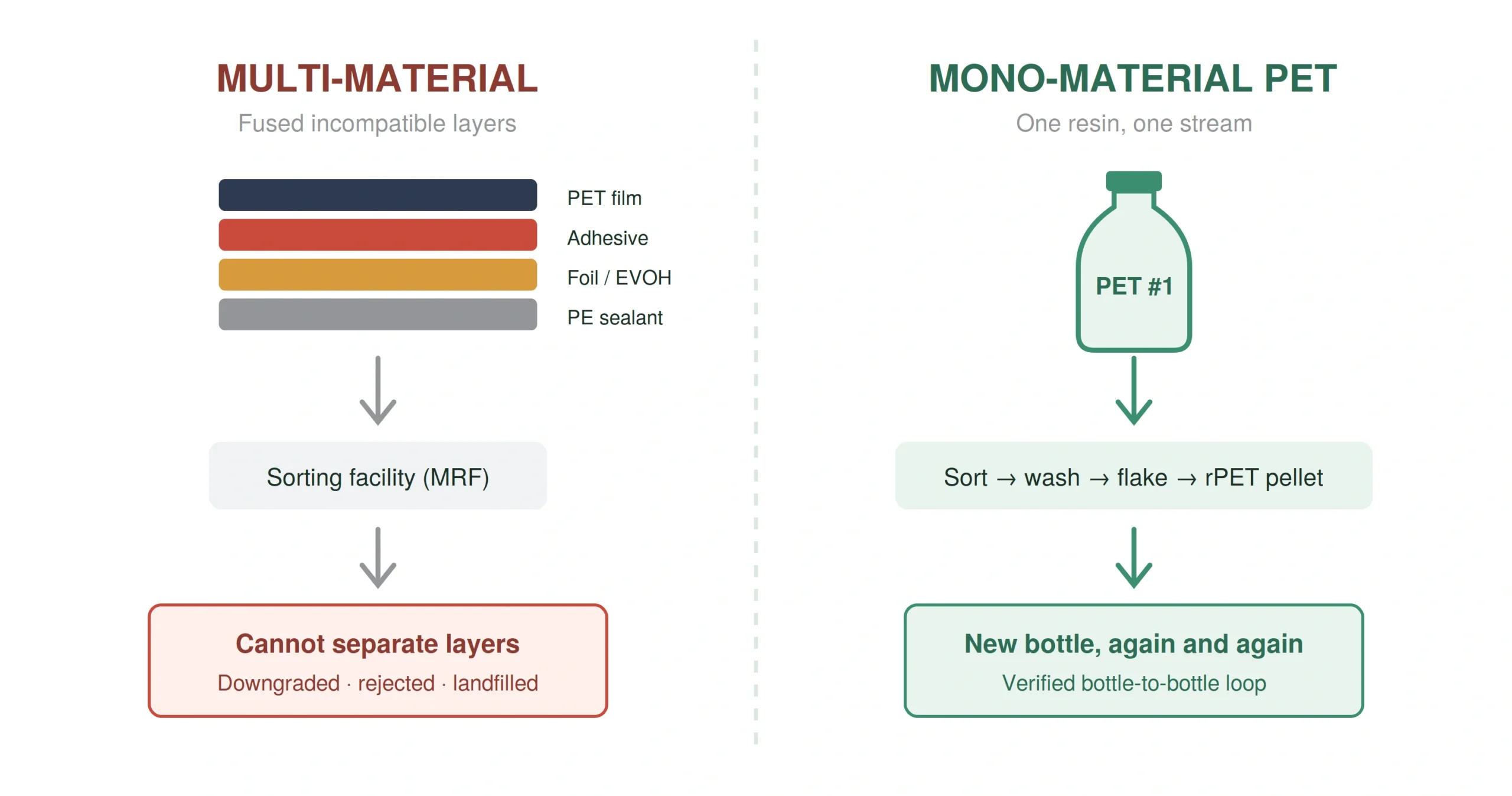
Mono-material packaging is built from a single polymer family — an all-PET bottle with a compatible closure and label system, an all-PP tub, a mono-PE film — rather than fused layers of incompatible materials. The distinction matters because recycling infrastructure sorts by resin. A PET bottle with a PVC shrink sleeve or a metallized multilayer laminate can’t be cleanly reclaimed; it gets downgraded, rejected, or landfilled.

Multi-material vs mono-material PET recycling comparison diagram
Figure 1. Two packages, two destinies. Multi-material laminates cannot be separated at material recovery facilities and exit the system as low-value residue. A mono-material PET container stays in one resin stream from curbside to rPET pellet — the only packaging format with a proven bottle-to-bottle loop at U.S. scale.

Under the new framework, that difference now shows up in practical places: your recyclability classification, your program fees, and how smoothly your products move through the largest consumer market in the country. Understanding it early makes every later decision easier.

The numbers behind SB 54 — and why 2026 is the pivot year

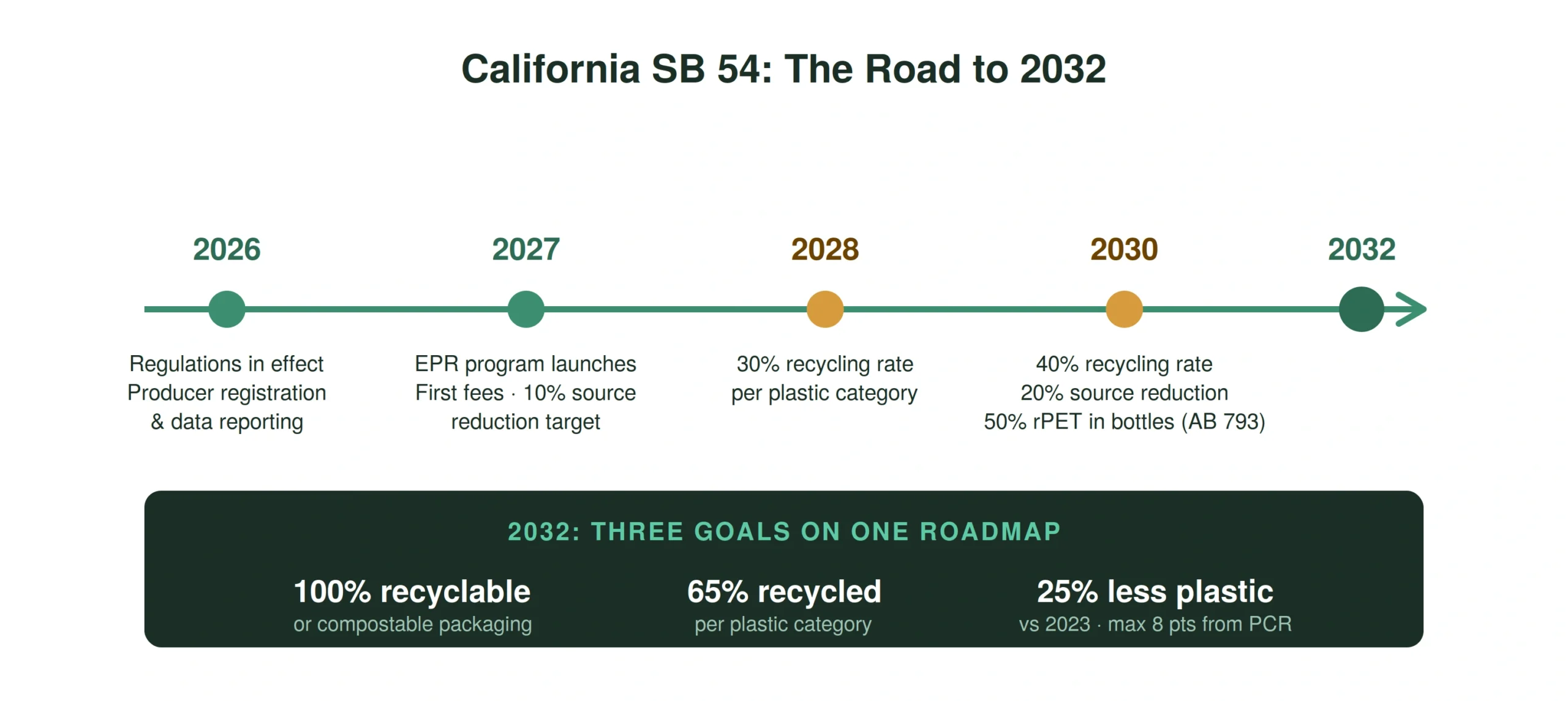
California’s law sets three hard targets for 2032: 100% of covered single-use packaging must be recyclable or compostable; a 65% recycling rate, measured per individual plastic category rather than across plastics broadly; and a 25% source reduction in single-use plastic versus 2023 levels, with interim targets of 10% by 2027 and 20% by 2030.

California SB 54 compliance timeline from 2026 to 2032
Figure 2. The SB 54 compliance timeline. Registration and SKU-level data reporting are already underway in 2026; program fees begin in 2027; recycling-rate and source-reduction targets escalate through 2032. AB 793’s recycled-content mandate for PET beverage bottles rises in parallel, from 25% today to 50% in 2030.

Two details in the regulations deserve every packaging director’s attention.

First, the 65% recycling rate applies to each covered material category separately. Formats that already struggle in recovery systems — multilayer films, heavily pigmented containers, mixed-material structures — face the steepest climb, because there is no averaging against high-performing formats.

Second, the source reduction rules cap the contribution of recycled content: no more than 8 percentage points of the 25% reduction can come from increased PCR, and only PCR added above 2023 baselines counts — validated through APR’s Postconsumer Resin Certification program. In other words, recycled content alone won’t carry the target — thoughtful package redesign is part of the journey. The encouraging part: for rigid PET, most of that redesign playbook already exists.

The law does carry real weight — CalRecycle can impose administrative civil penalties of up to $50,000 per day, per violation. And with seven U.S. states now operating packaging EPR laws — including Oregon and Colorado, with Minnesota, Washington, and Maryland moving through registration — there’s a genuinely helpful pattern: the data foundation you build for California becomes your foundation everywhere else. One well-planned effort serves the whole map.

Why rigid PET is the strongest mono-material starting point

Here is the part of the mono-material conversation that often gets lost in discussions about films and pouches: the PET bottle is the most proven mono-material format in the U.S. recycling system.

PET (#1 resin) is accepted in virtually every U.S. curbside program. According to NAPCOR’s 2024 PET Recycling Report — the 30th annual edition and the industry’s definitive dataset — the U.S. PET bottle recycling rate stood at 30.2% in 2024, above the prior decade’s average, while North American collection reached 39.2%, well beyond the Ellen MacArthur Foundation’s 30% benchmark proving that recycling “works in practice and at scale.” No other plastic packaging format comes close.

Just as important: bottles remain the dominant end market for rPET, accounting for more than 60% of all recycled PET sold domestically. That means a properly designed PET bottle doesn’t just get collected — it gets remade into another bottle. This is the bottle-to-bottle loop regulators are trying to engineer for every other format, and it already exists for rigid PET.

California reinforces this loop with AB 793’s recycled content mandates: PET beverage bottles must contain 25% rPET today, rising to 50% by 2030. Securing certified, traceable rPET supply early — ideally through a vertically integrated partner who controls the loop from collection to finished container — turns that escalation from a future risk into a simple planning item on this year’s calendar.

Designing PET packaging that actually passes recyclability review

“Mono-material” is a design discipline, not a resin choice. A PET container can still fail recyclability screening if the supporting components sabotage the stream. The details that determine whether your package clears APR Design Guide criteria include:

  • Closures and liners: PP or HDPE caps are tolerated because they float-separate in the wash process; metal or thermoset closures are not.
  • Labels and sleeves: Full-body PVC or PETG shrink sleeves can contaminate the PET flake stream or cause bottles to be missorted. Floatable, wash-off compatible label systems preserve recyclability.
  • Colorants and additives: Heavily pigmented or opaque PET drops flake value and can trigger the “non-clear” penalty in eco-modulated fee structures.
  • Barrier strategies: Where oxygen or UV protection is required, monolayer barrier additives and coatings compatible with PET reclamation beat multilayer co-injection structures that complicate recovery.

These are decisions made at the design-for-manufacturing stage — which is exactly why the most productive supplier relationships today look less like purchasing and more like co-planning, with your packaging partner at the table from the first sketch.

Planning your transition: the next 12–18 months

The compliance mechanics are accelerating through 2026: producer registration, SKU-level packaging data reporting, source reduction plans, and the first program fees arriving in 2027. Packaging redesign cycles for most brands run three to five years. Mapping those two timelines together simply means the planning conversations worth having are the ones happening now — calmly, with room to test and iterate, rather than later under time pressure.

Here’s the sequence we walk through with brands:

  1. Audit your portfolio by covered material category and flag every format at risk of failing recyclability classification.
  2. Prioritize conversions to proven mono-material formats — rigid PET and rPET first, where recycling infrastructure, end markets, and PCR supply already exist at scale.
  3. Lock in certified rPET supply with full traceability, because recycled content claims under SB 54 must be documented, not asserted.
  4. Choose manufacturing partners who own their supply chain, from resin to finished container, so your material data survives an audit.

The bottom line

Mono-material packaging is becoming a priority because the rules — and increasingly your customers — are asking for it. For brands selling into California and the growing group of EPR states, the most reliable path forward runs through the one format that has already proven circularity at scale: recyclable PET, increasingly made from certified rPET, in a verified bottle-to-bottle loop.

The transition takes planning, but it doesn’t have to be overwhelming. With a packaging partner who owns its supply chain, certifies its rPET, and prepared for EPR long before it arrived, the next five years become an opportunity to lead — together.


SB 54 Is Published. The Compliance Clock Is Running. Is Your Packaging Data Ready for Audit?

California’s SB 54 EPR regulations are now published, and the exposure window for CPG brands selling into the state is open. Recycled-content readiness is no longer a future planning item — it’s a present audit requirement. Here’s what that means for your packaging supply chain documentation.

California’s Senate Bill 54 has moved from policy discussion to published regulation. For CPG brands selling into the state, the compliance clock started the moment the rules were finalized. The question is no longer whether SB 54 will affect your packaging strategy. It’s whether your current supply chain can produce the documentation to prove compliance when the audit arrives.

This is the part that catches brands off guard. The regulation itself isn’t a surprise — SB 54 has been in development for years. What is a surprise, for many, is how much of the compliance burden falls on verifiable data rather than good intentions.

CaliSB54

What SB 54 Actually Requires From Your Packaging

The core of SB 54’s recycled-content provisions is straightforward: brands selling packaged goods into California need to demonstrate that their packaging meets specific recycled-content thresholds, and that the data supporting those claims is auditable.

“Auditable” is the key word. A supplier telling you that your bottles contain recycled content isn’t sufficient. The regulation requires documented proof — chain-of-custody records, verified recycled-content percentages, and supply chain provenance that can withstand scrutiny from CalRecycle or a third-party auditor.

For brands that have been treating recycled content as a marketing claim rather than an operational specification, SB 54 changes the equation entirely. The marketing claim now needs a compliance file behind it.

The Highest-Risk Period This Regulation Has Produced

The window between regulation publication and first enforcement is the highest-risk period SB 54 has created — and it’s open right now.

Brands without audited packaging data are exposed. Brands without documented recycled-content percentages are exposed. Brands whose suppliers cannot produce verified supply chain provenance on request are exposed.

The risk isn’t theoretical. California has demonstrated willingness to enforce packaging regulations, and the SB 54 framework includes reporting obligations that will surface gaps in documentation well before any penalty phase. The brands that discover their packaging data isn’t audit-ready during a reporting cycle — rather than before it — will be managing a compliance problem under time pressure, with limited options.

Why Most Suppliers Can’t Produce What SB 54 Demands

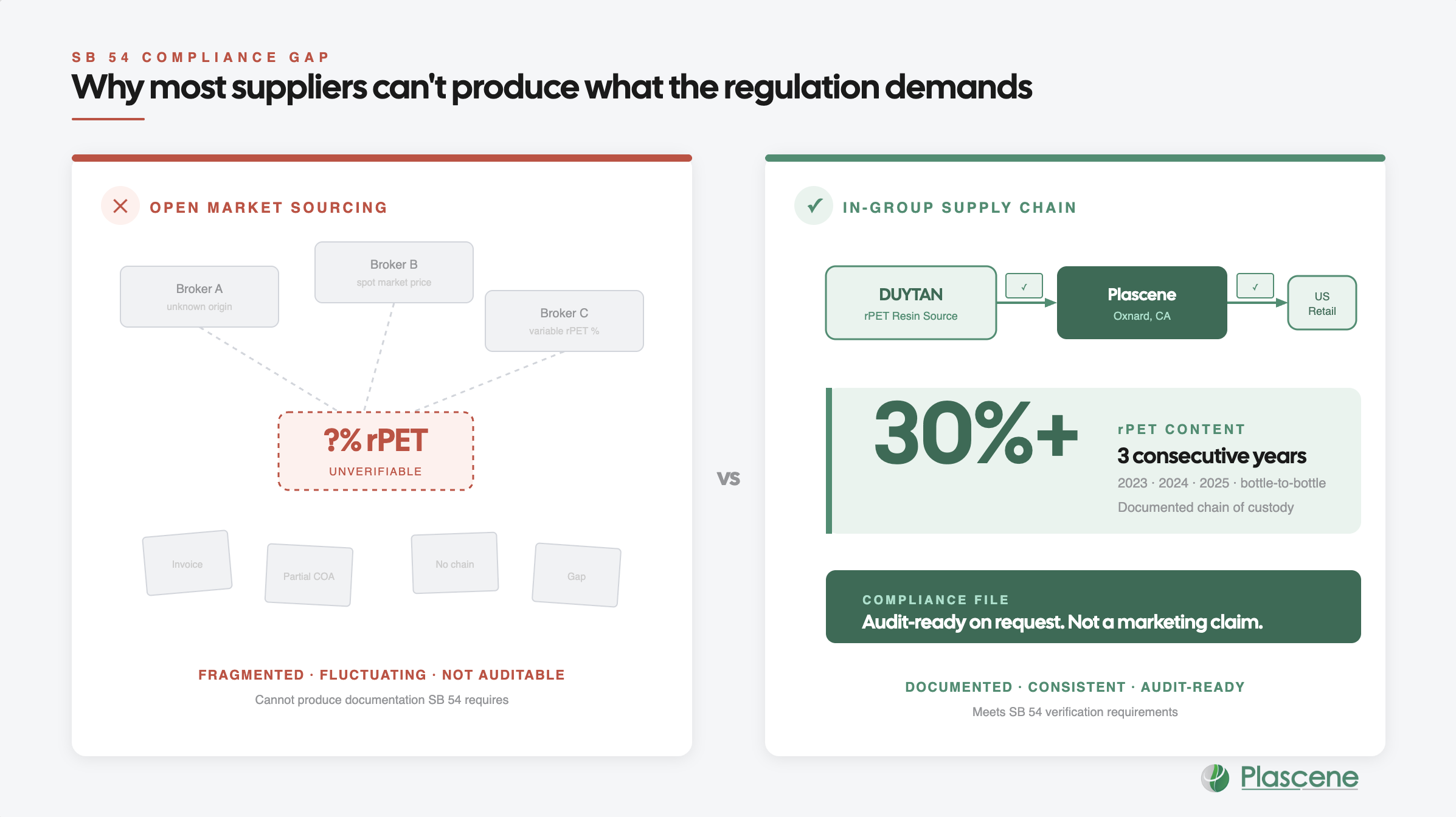
Comparison diagram showing open market sourcing with fragmented unverifiable rPET documentation versus Plascene in-group supply chain with documented 30%+ rPET chain of custody

Here’s the structural problem most CPG brands will encounter: their current packaging supplier purchases recycled resin on the open market.

Open-market resin purchasing means the recycled-content percentage in any given production run is a function of what was available and affordable at the time of purchase. It fluctuates. The documentation is fragmented across multiple brokers and intermediaries. The chain of custody is difficult to reconstruct, and nearly impossible to verify to the standard SB 54 requires.

This isn’t a criticism of open-market suppliers. It’s a description of how the market works. The problem is that SB 54 doesn’t accommodate that reality. The regulation requires consistent, verifiable, documented recycled content — exactly the kind of data that open-market sourcing structures struggle to produce.

What Audit-Ready Recycled Content Actually Looks Like

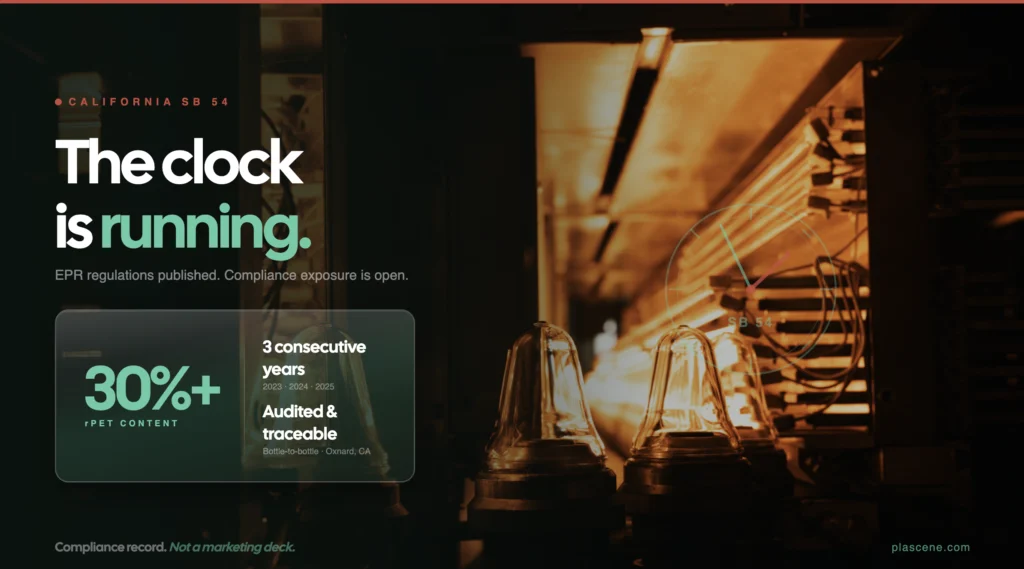
Plascene has maintained over 30% rPET content across its product base for three consecutive years — 2023, 2024, and 2025. That content is sourced through bottle-to-bottle recycling operations with a documented chain of custody, originating from DUYTAN Recycling and feeding into Plascene’s manufacturing facility in Oxnard, California.

That’s the kind of record that belongs in a compliance file, not a marketing deck.

The distinction matters because SB 54 compliance isn’t about what percentage a supplier claims. It’s about what percentage a supplier can prove — with documentation that traces the recycled material from source to finished package, through every step of the supply chain.

For brands evaluating whether their current packaging partner can support SB 54 reporting, the test is simple: ask your supplier for audited recycled-content data. If they can hand it to you on request, you’re in a defensible position. If they can’t, that gap will surface in your SB 54 reporting obligations before it shows up anywhere else.

The Documentation Question Every Brand Should Be Asking

SB 54 has shifted the packaging conversation from “what percentage of recycled content do you offer?” to “can you prove it?”

That shift favors suppliers with structural control over their recycled-content supply chain — suppliers who don’t depend on spot-market resin purchases to meet recycled-content commitments, and who maintain chain-of-custody documentation as a standard part of their manufacturing process rather than a special request.

The brands that will navigate SB 54 smoothly are the ones asking the right question now, before the first reporting deadline arrives: What does your packaging supply chain documentation look like today?

Explore Plascene’s rPET packaging solutions and supply chain documentation at plascene.com.

American Packaging Summit 2026 Recap: What We Heard, What We Learned, and Why Vietnamese Espresso Martinis Got the Conversation Going

The American Packaging Summit 2026 closed this week. We left with more than business cards. Real problems, real curiosity, and the kind of generosity that doesn’t fit on a brochure — here’s what we took home from our first APS, and why a Vietnamese Espresso Martini turned out to be the right call.

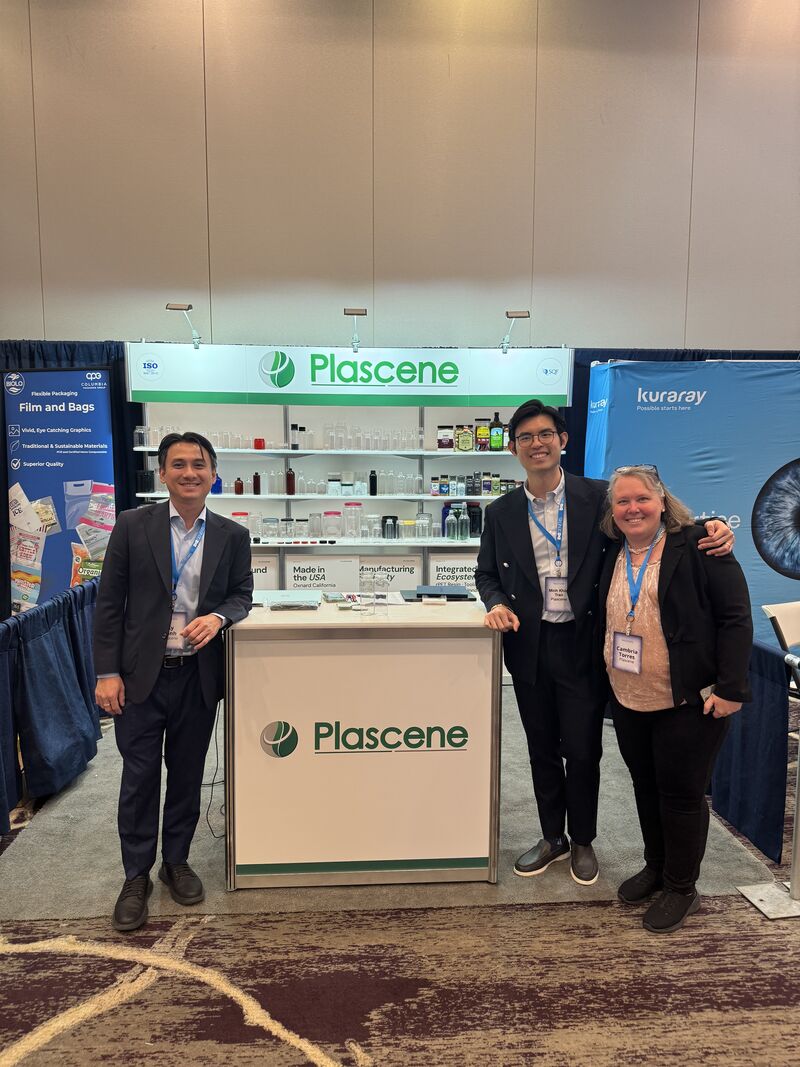
Plascene team at the American Packaging Summit 2026 booth in their first appearance at the industry event
The Plascene team at the booth — first appearance at American Packaging Summit. Photo: Plascene

The American Packaging Summit is one of the few moments each year when the packaging industry stops competing for attention online and starts actually talking. Booths. Receptions. Hallway conversations. The whole reason to be there is the part that can’t be replicated in a webinar — and looking back on APS 2026, we’re already planning to come back next year.

For Plascene, this was our debut at APS. New booth, new conversations, new chance to put real faces to the inquiries and supply chain questions we field every week from brands across the US. What we walked away with shaped how we think about the rest of 2026.

Why We Picked Vietnamese Espresso Martini

Networking drinks receptions usually default to safe choices. We picked something different.

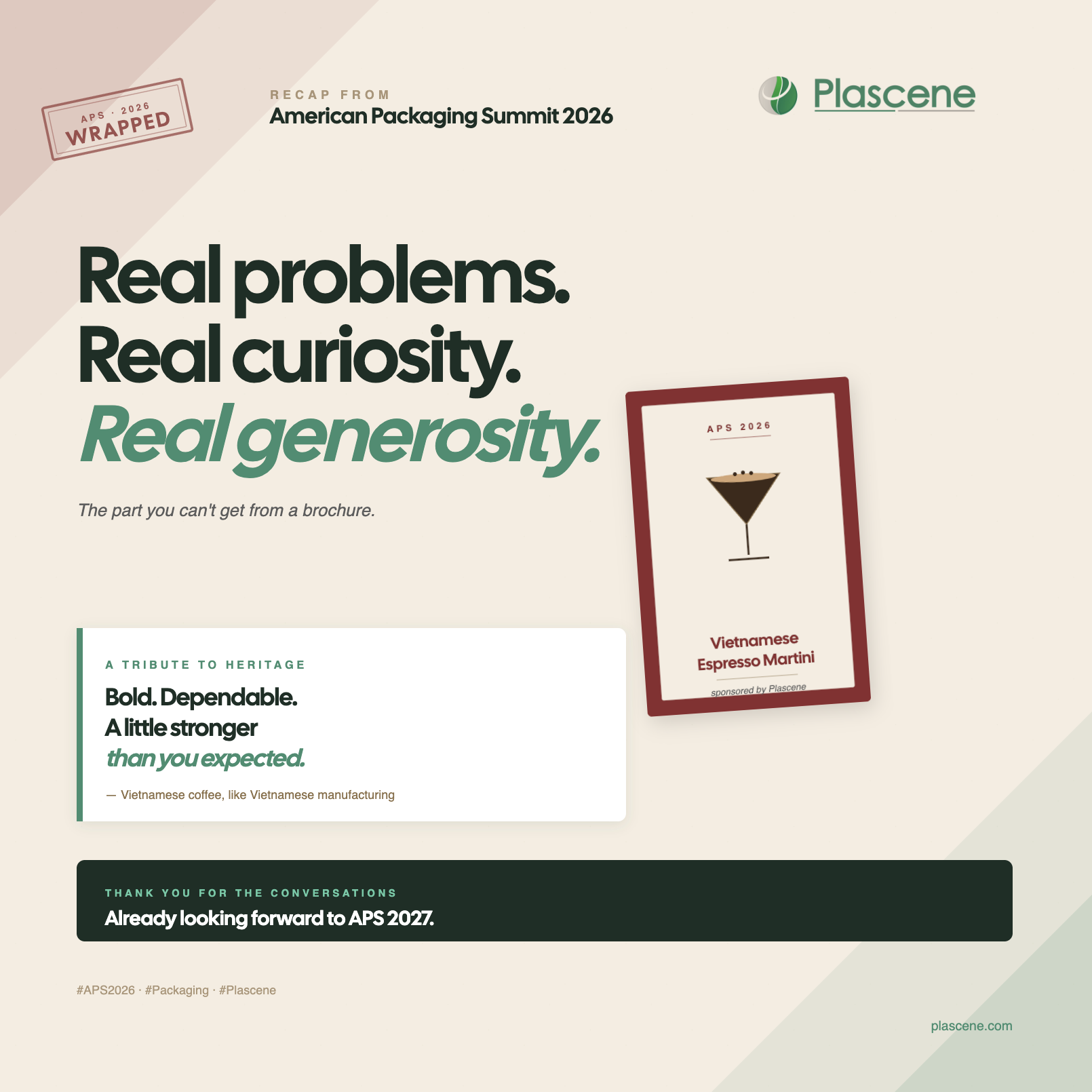
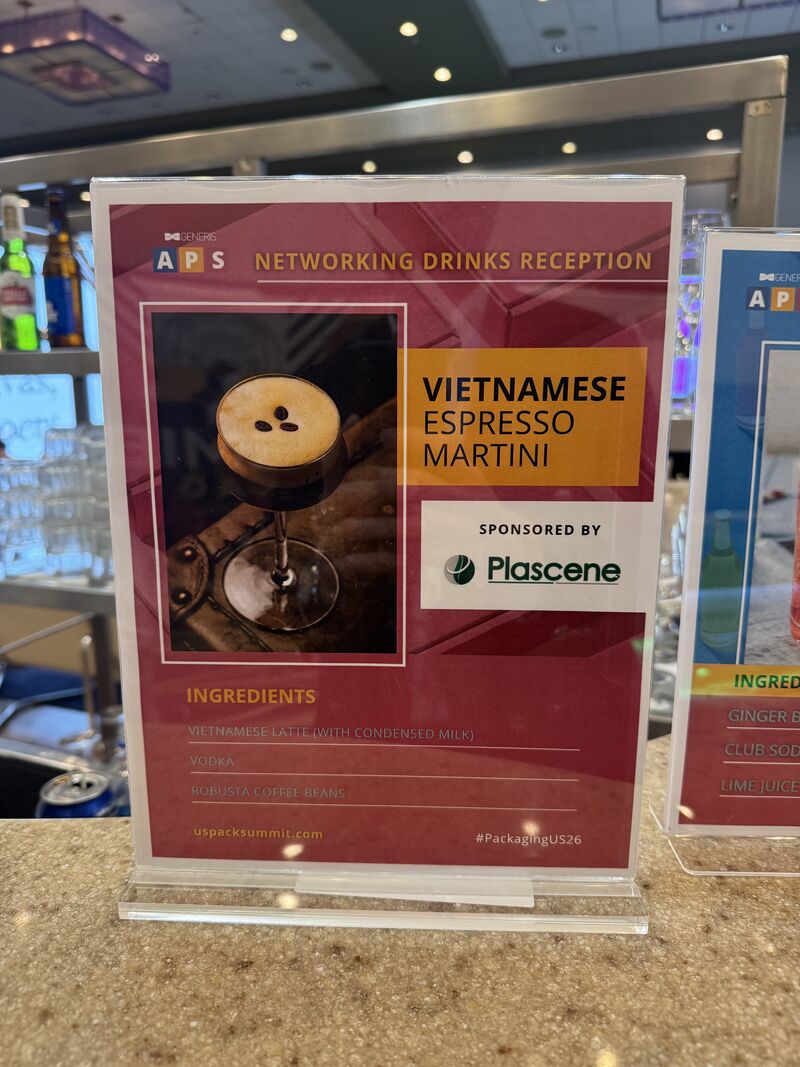
Vietnamese Espresso Martini cocktail card at the APS 2026 networking drinks reception, sponsored by Plascene
Vietnamese Espresso Martini — the reception drink we sponsored at APS 2026.

The drink at our reception was a Vietnamese Espresso Martini — a small tribute to our heritage and a deliberate signal about how we operate. Vietnamese coffee has a reputation that fits our manufacturing reality: bold, dependable, and a little stronger than you expected.

That’s not a marketing line. It’s how the Plascene operation actually works. Our rPET supply chain runs through Vietnam — specifically through DUYTAN Recycling, the country’s leading plastic recycler and the first to commercialize bottle-to-bottle recycling at scale. The US manufacturing hub in Oxnard, California is where that material becomes shelf-ready packaging for American brands. The combination is what gives us the lead-time stability and recycled content consistency that most US packaging buyers can’t get from a purely domestic vendor network.

The Vietnamese Espresso Martini was a way to acknowledge that openly — not bury it.

What the Conversations Reminded Us

We came to APS for the conversations, and the conversations delivered.

Brand operators stopped by with real problems — sourcing constraints, retailer sustainability deadlines, frustration with current suppliers who promise “vertical integration” and then quietly miss commitments when resin markets shift. Conversations like that don’t happen in a content marketing funnel. They happen when you’re standing in front of someone, holding a sample, and the person across from you decides to be honest about what’s not working.

What surprised us most wasn’t the volume of conversations — it was the generosity in them.

People shared what they’re working on. Talked through real challenges. Offered perspective on what they wish more suppliers understood. That’s the part of an industry summit worth the travel, the booth setup, and the late-night logistics.

You can’t get any of it from a brochure.

What Plascene Brings to the Conversation

Plascene rPET packaging product samples displayed at the APS 2026 booth — bottles and containers for nutraceutical and functional beverage brands
Sample portfolio at the booth: rPET and PET packaging for nutraceutical, functional beverage, and food & beverage brands.

For brands evaluating packaging suppliers in 2026, the questions are getting sharper. Recycled content commitments. EPR readiness across multiple states. Lead-time resilience through tariff and resin volatility. Traceability that survives a regulator or retailer audit.

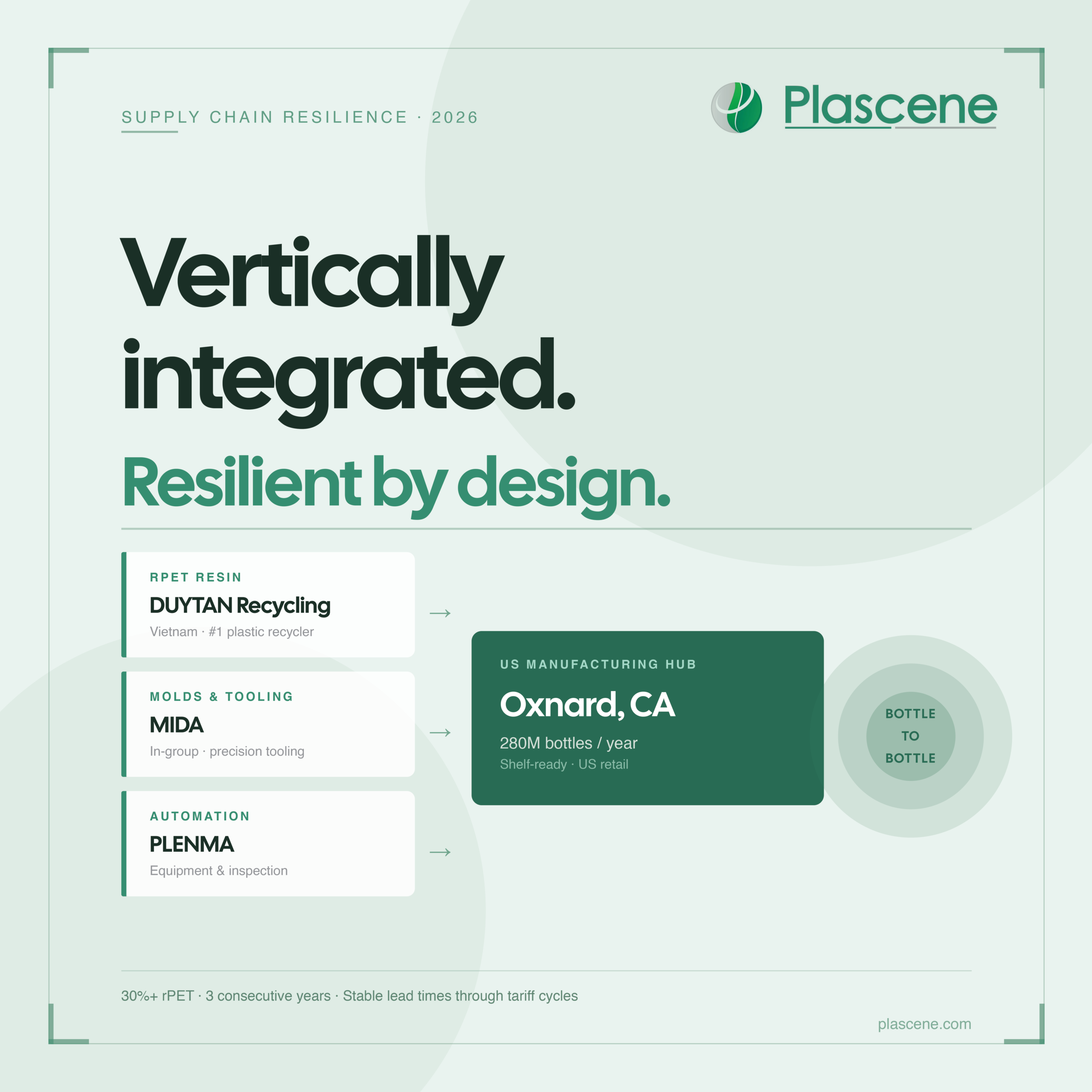
Plascene’s structure is built for those questions specifically. The in-group supply chain — rPET resin from DUYTAN, molds and tooling from MIDA, automation from PLENMA, all feeding into the Oxnard manufacturing hub — has held more than 30% rPET content across the product base for three consecutive years. Lead times stayed stable while competing suppliers scrambled to source recycled resin on the open market.

The conversations at APS confirmed what we already saw in our pipeline: brand teams are tired of suppliers who can’t explain their own supply chains under pressure. The opportunity for Plascene isn’t to outspend the bigger players on marketing — it’s to be the supplier that can actually answer the hard questions when they’re asked.

Three Patterns We’re Taking Home

A few patterns emerged across the conversations we had at APS that are worth flagging for any brand operator thinking about packaging strategy in 2026.

1. The Diligence Gap is Widening

The gap between marketing claims and supply chain reality is widening, not narrowing. Brand teams know it. They’re asking sharper diligence questions than they were even two years ago. Suppliers who can’t answer with specifics — facility locations, recycled content sources, verification documentation — are getting filtered out earlier in the conversation.

2. “Made in USA” Needs a Definition

“Made in USA” matters, but the definition matters more. Brands evaluating domestic manufacturing aren’t just looking at where the bottle is blown. They’re looking at where the resin comes from, who controls that supply, and what happens to the recycled content guarantee when global markets shift. The packaging buyers who understand this are no longer satisfied by surface-level domestic credentials.

3. Packaging is a Willingness-to-Pay Lever

In nutraceuticals and functional beverage especially, packaging is being recognized as a willingness-to-pay lever — not just a cost line. The brand teams we spoke with are increasingly aware that the bottle is the first physical signal a consumer receives, and they’re starting to allocate budget accordingly.

The Brands We Saw on the Floor

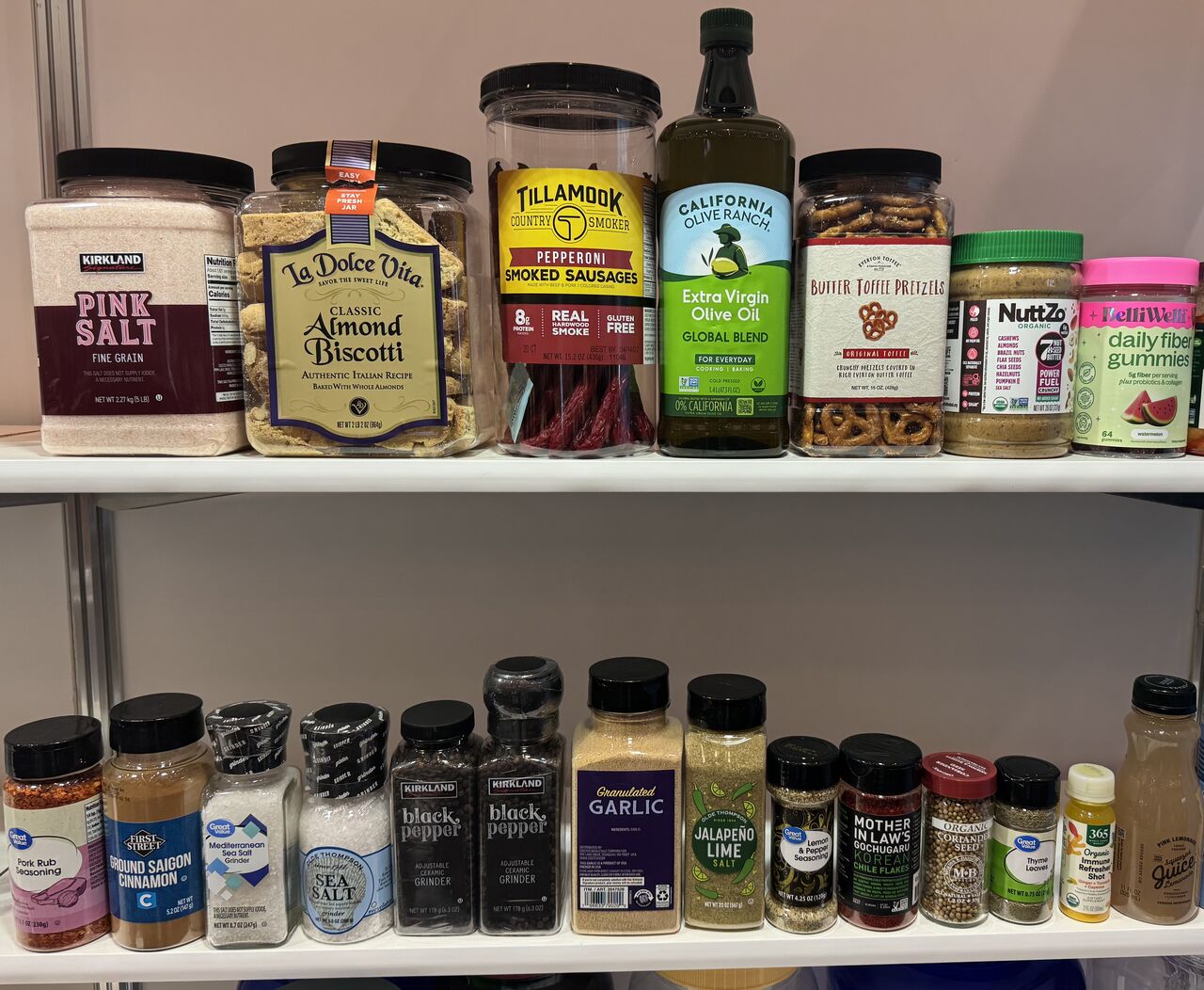
Premium retail brand packaging on display at American Packaging Summit 2026, illustrating the category of brands evaluating sustainable packaging solutions
A snapshot of the brand-side conversations happening on the floor — premium retail packaging across food, beverage, and personal care.

Walking the floor at APS, the categories of brands evaluating sustainable packaging mirrored what we see in our own pipeline: premium nutraceuticals, functional beverages, condiments and shelf-stable food, personal care. The brand teams asking the sharpest questions weren’t the biggest companies — they were the operators close enough to production to know exactly where their current packaging strategy was failing them.

That’s the audience APS attracts. And it’s the audience Plascene is built to serve.

Thank You

To everyone who stopped by the Plascene booth, joined us at the reception, or shared what you’re working on — thank you. The Vietnamese Espresso Martini was a small gesture. The conversations meant more than any sponsorship.

The reason to be at a summit like APS isn’t to deliver a pitch. It’s to listen to what’s actually happening in the market right now, from the people building the brands and operating the lines. APS 2026 delivered that — and we’re already looking forward to next year.

CONTINUE THE CONVERSATION

Looking for a packaging supplier who can actually answer the hard questions?

Explore Plascene’s rPET bottle and container portfolio at plascene.com, or reach out directly through our contact page.

Your Supplier Says “Vertically Integrated.” But What Happens When Supply Gets Tight?

“Vertically integrated.” “One-stop shop.” These phrases appear in nearly every packaging supplier pitch deck. They sound compelling — until a tariff cycle hits, resin goes short, or a capacity crunch ripples through a vendor network held together by purchase orders and goodwill.

At Plascene, we use the same language. But the structure behind it is fundamentally different — and it’s worth showing you exactly what that looks like.

The Problem With Most “Integrated” Suppliers

When most packaging suppliers claim vertical integration, what they mean is this: they have preferred vendors. A resin broker they call first. A tooling shop they’ve worked with for years. A freight partner who usually picks up on time.

That’s not integration. That’s a vendor list.

The difference becomes obvious the moment supply is under pressure. When resin prices spike due to tariff action, a supplier dependent on the open market passes the cost to you — or delays your order. When a tooling partner gets backlogged, lead times stretch. When freight tightens, your production schedule shifts.

The brands that feel this most acutely are those who never saw it coming, because everything looked fine during normal conditions.

How Plascene’s Ecosystem Actually Works

Plascene's Ecosystem
Plascene’s Ecosystem

Plascene’s supply chain is built around an in-group ecosystem — not a vendor list. Every critical input is sourced from within a connected group of companies, operating under shared visibility, shared incentives, and direct coordination.

Here’s what that looks like in practice:

rPET Resin — DUYTAN Recycling Plascene sources rPET resin directly from DUYTAN Recycling, Vietnam’s #1 plastic recycler and the first company to commercialize bottle-to-bottle recycling in the country back in 2019. This isn’t a spot-market relationship. It’s a direct, in-group supply arrangement — which means Plascene has real-time visibility into resin availability, pricing, and quality standards before a single pellet ships.

Molds & Tooling — MIDA Custom molds and tooling for Plascene’s bottle and container portfolio come from MIDA, also within the group. This direct relationship means shorter iteration cycles on new product development, tighter dimensional control, and no third-party markups or scheduling conflicts when tooling needs to be adjusted.

Automation & Inspection — PLENMA Manufacturing quality and throughput at the Oxnard, California facility is supported by automation and inspection equipment from PLENMA. In-group equipment sourcing means faster service response, shared technical documentation, and a production floor designed around consistent performance — not the lowest available bid.

All of this feeds into Plascene’s US manufacturing hub in Oxnard, California — producing up to 280 million bottles per year — which then ships shelf-ready product to US retail and brand customers.

What This Has Delivered: Three Years of Data

The in-group ecosystem isn’t a theoretical advantage. It’s measurable.

Plascene has maintained over 30% rPET content across its product base for three consecutive years — 2023, 2024, and 2025. That’s not a one-quarter headline. That’s consistent material performance across tariff cycles, resin market volatility, and shifting US import policy.

Lead times have remained stable through periods that sent other suppliers scrambling. When resin costs shifted due to tariff pressure, Plascene’s direct DUYTAN relationship provided buffer and visibility that open-market buyers simply didn’t have.

This is what supply chain resilience actually looks like — not a press release, but three years of uninterrupted delivery.

The rPET Question Most Brands Get Wrong

Many brands are now under pressure to increase recycled content in their packaging. Some are responding to state-level EPR legislation. Others are responding to retailer sustainability scorecards or brand commitments made publicly.

The common mistake is treating rPET as a specification checkbox: source a supplier who claims rPET content, put it in the sustainability report, move on.

The problem is that rPET content is only as reliable as the supply chain behind it. If your supplier is buying recycled resin on the spot market, their ability to guarantee content percentage fluctuates with availability and price. In tight markets, the rPET percentage drops — quietly.

Plascene’s direct relationship with DUYTAN means the recycled content story is traceable from source to finished bottle. Brands that need to substantiate their sustainability claims — to retailers, to regulators, or to consumers — have the documentation to do it.

American Operations. Vietnamese Ecosystem.

There’s a common misconception that “made in USA” and “globally sourced inputs” are in conflict. They’re not — as long as the sourcing structure is transparent and controlled.

Plascene’s manufacturing is in Oxnard, California. The jobs, the production output, the customer relationships — all US-based. The upstream inputs come from within a Vietnamese industrial group that Plascene has direct equity and operational ties to.

That structure is what makes the resilience real. It’s not outsourcing risk — it’s internalizing the supply chain upstream so that the US manufacturing operation runs without interruption downstream.

A Simple Question Worth Asking Your Current Supplier

When your current supplier describes themselves as vertically integrated, ask them this: What does your supply chain look like when resin is short and tariffs are rising at the same time?

If the answer involves “we have good relationships with our suppliers” — you have your answer.

If they can show you a live diagram of where every input comes from, who owns the relationship, and what the fallback is when any node in the chain is stressed — that’s integration.

At Plascene, we can show you that diagram. And we can back it up with three years of delivery data.


Plascene manufactures rPET and PET bottles and containers at its Oxnard, California facility, serving US brands across nutraceuticals, functional beverage, personal care, and food & beverage. Learn more at plascene.com.

2026 Functional Packaging Landscape: Navigating Consumer Demands in the US Market.

Standing Strong in the 2026 Functional Packaging Landscape

The year 2026 marks a defining inflection point in the U.S. packaging landscape, particularly on the West Coast. Sustainability is no longer a “nice‑to‑have” feature—it is a regulatory imperative. With California’s AB 793 requiring all plastic beverage containers to contain at least 25% post‑consumer recycled plastic (rPET) as of early 2025, the enforcement phase is now in full swing. By 2030, this requirement will increase to 50%, making 2026 a critical midpoint for brands to stabilize and scale their post‑consumer resin integration strategies.


Embracing 2026 Functional Packaging Trends: Sustainable and functional solutions for the US beverage market.


Additionally, the upcoming SB 54 Baseline Producer Report due in February 2026 is intensifying administrative and operational pressure on brands. We recognize that behind these regulations lie real concerns around supply‑chain continuity, reporting accuracy, and compliance risk. Plascene serves as your strategic partner—transforming regulatory complexity into a competitive advantage. Our expertise in navigating evolving legal frameworks ensures your brand remains compliant, protected, and penalty‑free.

Securing Supply Amid the “rPET Crunch”

A defining trend for 2026 is the race for long‑term supply security. According to NAPCOR, demand for food‑grade rPET in the U.S. is expected to significantly exceed domestic collection rates, creating potential shortages—particularly across the West Coast. As a result, B2B buyers are shifting focus from unit price alone to guaranteed material availability.

Plascene addresses this challenge by leveraging a resilient, globally diversified supply network. We ensure our partners have access to consistent, high‑quality rPET that meets the FDA’s strict standards, safeguarding production lines against market volatility. This stability allows brands to maintain predictable pricing and uninterrupted output, even as regional supply tightens.

The Power of PCR Certification and Radical Transparency

In 2026, transparency is is the currency of trust. This is where PCR (Post‑Consumer Recycled) certification becomes indispensable, serving as verifiable proof of your brand’s contribution to a circular economy.

Plascene is committed to delivering materials that meet rigorous PCR certification standards. By partnering with us, you gain audit‑ready documentation that builds confidence with retailers, regulators, and end consumers—keeping your products approved, credible, and shelf‑ready at major U.S. retailers.

Simplifying Compliance Through Technical Data Excellence

Navigating regulations such as SB 54 can be daunting, as they require precise, defensible data on packaging weight and material composition for annual reporting. Many brands fail audits not because they lack recycled content, but because they cannot substantiate their claims with granular, regulator‑ready data.

At Plascene, we believe compliance should be clear, efficient, and stress‑free. We are always ready to provide comprehensive Technical Data Sheets (TDS) upon request. This ready‑to‑use data enables compliance teams to report accurately, reduce administrative burden, and minimize the risk of costly errors.

Plascene is ready to provide you with complete, audit‑ready technical documentation.

Adaptive Mold Design for an Evolving Market

Consumer expectations and labeling regulations continue to evolve. Whether responding to new deposit symbols or enhancing ergonomic performance, flexibility in packaging design has become a strategic necessity. The 2026 consumer prioritizes easy‑to‑recycle, mono‑material designs, accelerating the phase‑out of complex, multi‑material components.

Plascene offers advanced Custom Mold Design expertise to help brands stay ahead. Our technical team collaborates closely with you to create functional, visually refined, and regulation‑ready packaging that resonates with the 2026 U.S. consumer—without the cost or disruption of starting from scratch.

Conclusion: Leading Through the 2026 Functional Packaging Transition

Navigating the U.S. packaging market in 2026 requires more than a supplier—it demands a partner with foresight and technical authority. From securing your rPET supply to delivering the data and design flexibility required for compliance, Plascene is deeply invested in your long‑term success. Let us help you future‑proof your packaging strategy today.

rPET Coldpress Bottles: Maximizing Beverage Sales with HPP-Ready Designs

Ensuring HPP Integrity with rPET Cold‑Press Bottles

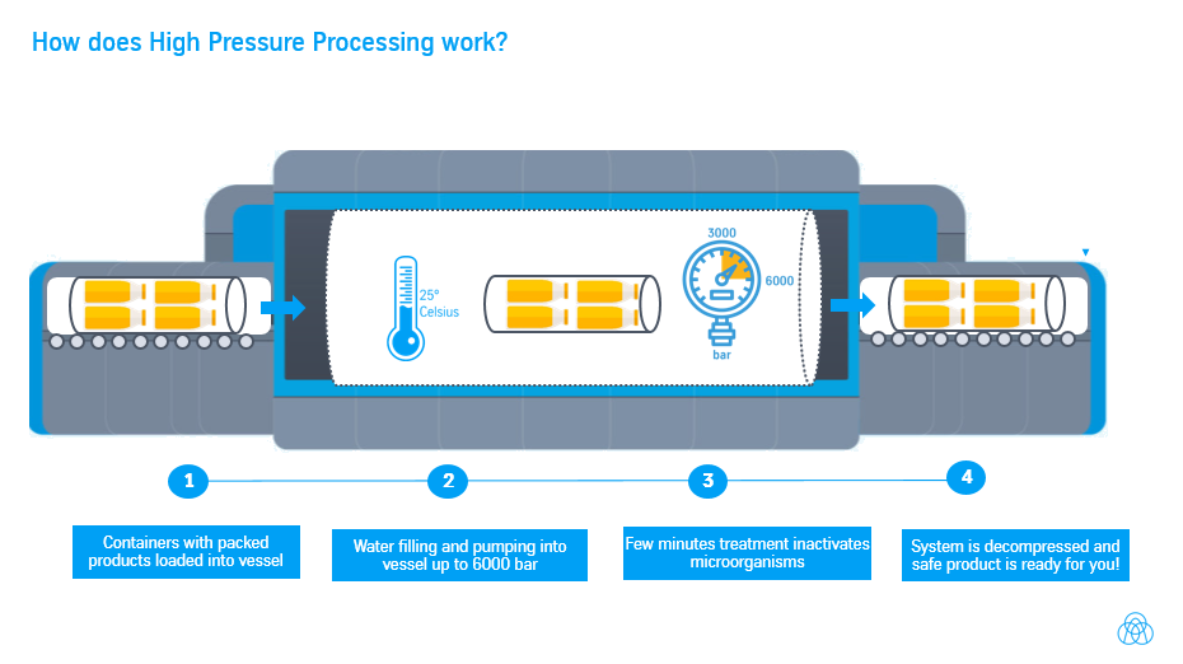
In today’s competitive U.S. beverage market, High-Pressure Processing (HPP) is no longer a premium differentiator—it is a commercial standard for retail‑scale distribution. As the industry’s preferred method for pathogen reduction without heat, HPP enables brands to meet food‑safety requirements while preserving the fresh taste, nutrients, and visual appeal consumers expect.

Yet HPP is unforgiving to packaging. Under extreme pressure cycles, a bottle must perform as a structural system—not merely as a container. Plascene’s rPET Cold‑Press Bottles are purpose‑engineered to withstand these forces, ensuring your premium juice products retain their form, seal, and shelf appeal from production line to final pour.

That is why Plascene’s rPET Coldpress Bottles—a benchmark for HPP‑compatible packaging—are designed to optimize both operational reliability and retail performance.

Engineering for Resilience: Performance Under Pressure

HPP represents a true stress test for packaging integrity. During each processing cycle, bottles compress by approximately 15% in volume before rebounding—an environment that quickly exposes the weaknesses of low‑quality plastics.

  • HPP Resilience: Plascene’s Round Profile distributes pressure evenly across 360 degrees, reducing stress concentration by up to 40% compared to angular designs, effectively eliminating permanent paneling. This geometric advantage ensures that the rPET Coldpress Bottles return to their original shape perfectly once the pressure is released.
  • Material Precision: Our rPET is manufactured under strict Intrinsic Viscosity (IV) controls, allowing the bottle to flex without micro‑stress cracking—the root cause of most post‑HPP leakage failures.
  • 38mm Tamper-Evident Security: Engineered for absolute reliability, our 38mm TE finish maintains 100% seal integrity. Even under pressures reaching 87,000 psi, the cap remains fully seated, delivering a leakage failure rate below 0.01%. This level of precision makes Plascene’s rPET Cold‑Press Bottles a trusted choice for high‑volume beverage producers.

California SB 54 Compliance: Future‑Proofing Your Supply Chain

As sustainability regulations accelerate across the Western U.S., speed‑to‑market must now align seamlessly with environmental compliance.

  • Regulatory-Ready: California SB 54 mandates ambitious recycling and Extended Producer Responsibility (EPR) targets. Plascene goes beyond basic PET compliance, offering customized rPET solutions engineered to meet both your and regulatory requirements today—without operational disruption.
  • Domestic Speed Advantage: In B2B beverage manufacturing, proximity matters. With U.S.‑based production, Plascene offers competitive lead time compared to our international competitors. Local sourcing supports sustainability objectives while minimize freight costs and supply‑chain risk.

The Economics of “Clear” Branding: rPET vs. Standard PET

Sustainability does more than build credibility—it drives measurable growth.

  • Visual Parity: Plascene’s rPET delivers glass‑like clarity comparable to virgin PET. Industry surveys indicate that 72% of U.S. consumers associate bottle clarity directly with perceived freshness.
  • Built‑In Premium: According to McKinsey research, products making sustainability claims achieve up to 28% higher cumulative growth than non‑sustainable counterparts. Choosing rPET Cold‑Press Bottles positions your brand at the intersection of transparency, trust, and performance, strengthening both consumer loyalty and revenue potential.

Conclusion: The Right rPET Cold‑Press Bottle Is a Competitive Advantage

Selecting Plascene’s rPET Cold‑Press Bottles is more than a packaging decision—it is a strategic investment in reliability, compliance, and premium brand equity. From HPP resilience to regulatory readiness and rapid delivery, we provide the technical confidence and supply‑chain advantage needed to lead the modern juice market.

The Silent Salesman: Why PET Round Straight Wall Jars Drive Your Sales Growth

Beyond the Label: Where 90% of Decisions Begin with Clarity

Your product has just 3 seconds to win a customer’s trust. In that moment, nothing speaks louder than visual purity. Plascene’s high‑precision PET Round Straight Wall Jars are engineered for brands that refuse compromise – reducing labeling scrap by 2.5%, increasing production speed by up to 30%, and aligning seamlessly with the elevated sustainability expectations driving the 2026 “Curated Kitchen” movement.

Plascene’s trio of crystal‑clear Round Straight Wall Jars – designed for spreads, cookies, and gourmet applications – embody the unmistakable brilliance of premium glass.


Visual trust drives the modern shelf. Studies show that 70% of purchase decisions occur at the point of sale, where 90% of sensory influence is visual. This is where flawless clarity becomes a strategy.

With decades of expertise, Plascene products deliver a level of transparency that rivals glassware alternatives. The authentic color of your product becomes the hero – bright, honest, and unfiltered. Unlike low‑grade PET, our jars eliminate haze, ensuring a premium presence that captures attention in the critical first 3 seconds.

Perfectly Round, Perfectly Presented: Precision That Elevates Your Brand

In premium manufacturing, precision isn’t an aesthetic preference—it directly safeguards your operational profitability.

Wall‑thickness inconsistencies are the hidden culprit behind label wrinkles, machine stoppages, and escalating scrap rates. Plascene’s engineering excellence ensures dimensional stability across every unit, enabling brands to reduce scrap from 3% to below 0.5%.

  • Measurable ROI: On a 100,000‑unit run, this 2.5% reduction represents thousands in annual savings—excluding the additional gains from avoided downtime.
  • Accelerated Output: Ultra‑uniform walls allow labeling lines to run up to 30% faster. In 2026, speed paired with reliability is no longer optional—it’s how brands protect their margins and maintain uninterrupted production flow.

Our high‑precision wide‑mouth PET line exemplifies technical mastery that directly reduces labeling defects and increases throughput.

Glass-Like Brilliance, Future-Bright rPET

In 2026, sustainability defines premium. Pinterest’s “Curated Kitchen” trend highlights a shift toward beautifully designed essentials meant to be displayed, not hidden—and packaging is now part of that story.

Plascene’s rPET achieves the same luminous clarity as virgin PET while meaningfully reducing your environmental footprint. Unlike glass, our rPET Straight Wall Jars are lightweight, shatter‑resistant, cost‑efficient to ship, and fully recyclable.

  • Eco Impact: Choosing rPET reduces greenhouse gas emissions by up to 67% versus virgin PET—without sacrificing clarity.
  • Consumer Connection: With 73% of millennials prioritizing eco‑friendly packaging, these jars become more than containers—they become proof of your brand’s values.

Curated Kitchen–inspired arrangements of clear rPET jars showcase how sustainability and premium design can coexist beautifully.

Precision Over Price: Your Safety Net in Production

In high‑volume operations, “close enough” has a high cost. Many brands learn too late that low‑cost suppliers introduce micro‑variations—especially in the neck finish—that lead to catastrophic capping failures. Even a microscopic deviation can cause leaks, label waste, and hours of corrective downtime.

That’s why Plascene delivers not just jars, but a Consistency Guarantee. Every batch is produced under strict dimensional controls, ensuring perfect machine fit and dependable sealing performance.

Precision isn’t a luxury—it’s your safety net against lost margins, delayed shipments, and defective inventory. For your next major project, choose the Round Straight Wall Jar engineered to eliminate hidden risks.

Ready to reduce scrap by 2.5% and add consistency to your supply chain?

Explore our full collection below and discover the Plascene difference.

The Plastic Pinch Grip Jar: Boost Loyalty, Cut Costs

Human-Centric Design: Why the Plastic Pinch Grip Jar is the New Loyalty Driver

In today’s consumer package goods (CPG) market, the plastic Pinch Grip jar has become a vital solution for enhancing consumer loyalty. Packaging is no longer just a container; it is the direct physical touchpoint between your brand and the consumer. For enterprises, the critical challenge is clear: How do you optimize operational costs while creating enough differentiation to retain customers?

The Plastic Pinch Grip Jar used for granola storage

Many brands focus heavily on marketing messages but often overlook the user experience that ultimately drives retention.

According to the Mintel US Food Packaging Trends 2025 Report,

57% of U.S. consumers rank “easy-to-open” and functional packaging as a top priority – significantly higher than the 25% who prioritize recyclable materials. This signals a shift toward pragmatism: customers need products that are easy to hold and use every day.
  • The Advice: Rather than focusing solely on sustainability, brands should also invest in practicality to meet rising market expectations.
  • The Solution: Plascene’s 128 oz PET Concave Pinch Grip jar, which features deeply recessed finger molds that create a natural “mechanical lock” for the hand. This ergonomic design allows users to maintain full control when pouring—even with large bulk sizes – and remains secure when fingers are wet or oily.

Functional Packaging: Your Competitive Edge in 2026

Mintel’s Global Packaging Predictions for 2026 emphasize that functional packaging will become a primary competitive tool. As the global population ages, the demand for “easy-to-grip” designs is no longer an option – it is becoming a mandatory requirement.
  • The Advice: Do not let packaging become a barrier between your customer and your product. In fact, approximately 20% of successful new market launches are driven by structural innovations (such as added handles or pouring spouts) rather than changes to the ingredients inside.
  • Logistics Efficiency: Beyond ergonomics, transitioning to high-quality PET/rPET for the plastic Pinch Grip jar series – such as the 256 oz PET Plastic Round Finger Grip Jar – offers a strategic financial advantage. It delivers premium glass-like clarity but significantly reduces pallet weight. This directly helps your business slash freight costs and eliminates the risk of breakage throughout the national supply chain.
Easy pouring with The Pinch Grip Packaging design

Operational Agility: Scaling with Confidence

In a volatile market, what you need from a packaging partner is not just a product, but operational agility.
When your demand spikes unexpectedly, your supply chain cannot afford to pause. Our team is built to optimize production capacity and fulfillment to meet high-volume, urgent requests. We ensure that your packaging remains the most reliable link in your entire system.

Conclusion: The Plastic Pinch Grip Jar, Win-Win Package

Packaging is the first tangible touchpoint a customer has with your product.
Investing in the Pinch Grip  design is more than a packaging update; it is a strategic move to protect your bottom line and build brand loyalty based on a deep understanding of consumer behavior.
Better handling and smarter logistics are just a click away. Discover more about Plascene’s Pinch Grip Jar.

Plascene Shaping the Future at Natural Products Expo West 2026

The Heart of the Natural & Organic Living Community

Every March, the natural consumer packaged goods (CPG) industry converges in Anaheim and Plascene is proud to confirm our presence at Natural Products Expo West 2026 (Booth Number: 2930), taking place March 3 – 6, 2026 at the Anaheim Convention Center, California.
This year’s event holds special significance as Expo West celebrates its 45th anniversary of championing health-driven innovation. More than a trade show, Expo West is where the values of conscious, healthy living are celebrated and transformed into real-world impact.

Shaping the Circular Economy

As the global manufacturing sector unites under the goal of reducing environmental impact, Plascene is dedicated to leading this charge. Our participation in Expo West is a testament to our pledge: offering brands high-caliber, circular packaging solutions that align with the most rigorous international sustainability standards. We are aggressively expanding our rPET capabilities to meet the demands of the natural products sector, proving that responsible packaging is no longer just an option, it is the new benchmark for excellence. We are here to deliver solutions that are as kind to the planet as they are effective for your business.

Event Details & Official Resources

To explore the comprehensive agenda for Natural Products Expo West 2026, including education sessions, events, and the full exhibitor list at the Anaheim Convention Center, we invite you to consult the official event portal. We recommend visiting the organizer’s website to stay updated on the latest announcements and to effectively plan your attendance at this landmark 45th-anniversary event.

Connect with Plascene

As the industry gathers to celebrate innovation and sustainability, Plascene is ready to partner with you on your packaging journey. If you are seeking FDA-compliant rPET solutions or premium packaging that aligns with your natural product ethos, we welcome the opportunity to discuss how we can support your brand.
To schedule a dedicated meeting with our team during the expo, or to inquire about our sustainable solutions beforehand, please feel free to contact us through our corporate channels below.
  • Corporate Website: www.plascene.com
  • Booth: #2930 at Natural Products Expo West 2026
  • General Inquiries: info@plascene.com
  • Toll-Free Hotline: 1-888-848-6388
  • Headquarters: 1600 Pacific Avenue, Oxnard, CA 93033, USA
We look forward to connecting with you in Anaheim and shaping a greener future together.

Kicking Off 2026 in Style: Plascene to Exhibit at the Reimagined Winter FancyFaire in San Diego

A New Look for a New Year

The specialty food industry is evolving, and so is its premier winter event. Plascene is thrilled to announce that we will be exhibiting at the inaugural Winter FancyFaire (Booth Number: 3643). Taking place from January 11-13, 2026, the event moves to the vibrant city of San Diego, California, offering a fresh backdrop for innovation and flavor.
Following our successful engagement at SupplySide Global 2025, we are eager to carry that momentum into the first major industry gathering of the new year. Winter FancyFaire is where trendsetting artisan producers and premium beverage brands gather to define the tastes of 2026.

Where Premium Product Meets Premium Packaging

In the specialty food sector, packaging is more than just a container; it is an essential part of the product’s allure and brand story. The reimagined FancyFaire focuses heavily on experience and discovery – from the exhibit hall to the “Campus Tasting Trail” in San Diego’s Gaslamp Quarter.
At the San Diego Convention Center, Plascene will showcase how our high-quality PET and rPET packaging solutions can elevate artisanal products. We understand that specialty items, whether gourmet sauces, cold-pressed juices, or unique spices, require packaging that offers crystal-clear visibility, premium aesthetics, and reliable protection.
We invite attendees to visit our booth #3643 to discover packaging solutions designed to catch the eye of discerning buyers and complement the high-quality ingredients inside. Let’s discuss how we can help your brand stand out on the shelves in 2026.

Driving Innovation at the Forefront

In an era where packaging defines brand value, Plascene is proud to stand among the industry’s vanguard. Our presence at Winter FancyFaire underscores our commitment to not just meeting global standards, but setting them. We are joining the elite tier of exhibitors dedicated to pushing the boundaries of what is possible in food safety and aesthetic appeal. We believe that premium packaging is the silent ambassador of your brand, and we are here to demonstrate how our advanced PET technologies provide the strategic edge needed to lead in a competitive global marketplace.

Event Details & Official Resources

For a comprehensive overview of the Winter FancyFaire 2026 agenda, including the full exhibitor directory and logistical details regarding the new San Diego venue, we invite you to visit the official event portal. We recommend consulting the organizer’s website to stay informed on the latest program updates and to plan your visit effectively for this premier industry gathering.

Connect with Plascene

At Plascene, we are committed to being your strategic partner in packaging innovation. If you are looking to elevate your brand presence in the new year with sustainable and premium packaging solutions, we welcome the opportunity to discuss your specific requirements.
To ensure dedicated time for a consultation with our experts during the exhibition, or to discuss your needs prior to the show, please do not hesitate to reach out to us through our corporate channels below.
  • Corporate Website: www.plascene.com
  • Booth #3643 at Winter FancyFaire 2026
  • General Inquiries: info@plascene.com
  • Toll-Free Hotline: 1-888-848-6388
  • Headquarters: 1600 Pacific Avenue, Oxnard, CA 93033, USA
We look forward to welcoming you to San Diego and exploring how we can drive your success in 2026.

Plascene’s SupplySide Global 2025 Recap: Leading the Way as a Premier PET & rPET Bottle Manufacturer

Las Vegas, NV – The energy at SupplySide Global 2025 was intense, and for Plascene, it was a pivotal week dedicated to connecting with the health, supplement, and functional food industries on the critical topic of sustainable packaging solutions. 

Our team was proud to engage with thousands of professionals at Booth #7652, demonstrating how Plascene is leading the charge in providing safe, compliant, and environmentally conscious plastic packaging. As a dedicated PET & rPET Bottle Manufacturer, our focus remains on delivering quality and scalability for the next generation of wellness products. 

Plascene at SupplySide Global 2025

Driving the Circular Economy with Sustainable Wholesale PET Bottles 

The central theme of our discussions resonated perfectly with a major industry trend at the show: the necessity of adopting Post-Consumer Recycled (PCR) materials, particularly within wholesale PET bottles supply chains. 

  • The Plascene Advantage: We showcased our full range of rPET (recycled PET) bottles and jars in various sizes and colors, prominently displayed on our shelving units. This display emphasized our commitment to sourcing high-quality, food-grade PCR. For brands seeking reliable partners for Wholesale PET Bottles, our process is crucial for meeting mandatory recycled content targets and satisfying strong consumer demand for sustainability. 
  • Safety & Compliance Confirmed: Our booth clearly featured our ISO and SQF certifications, assuring visitors that our products – including both our recycled and virgin resin solutions – adhere to the highest international standards for quality and food safety, essential for sensitive dietary supplements. 

Plascene's Booth #7652 at SupplySide Global 2025
Plascene’s Booth #7652 at SupplySide Global 2025

Strategic Sourcing for Bulk Plastic Bottle Orders 

SupplySide Global wasn’t just about materials – it was about integrated solutions that scale. We positioned Plascene as a strategic partner, ready to help brands navigate complex supply chain challenges, particularly those with high-volume needs. 

  • Integrated Ecosystem: Our booth highlighted our Integrated Ecosystem, backed by the Duy Tan Group’s precision molds (DUFO) and advanced automation. This synergy allows us to efficiently handle bulk plastic bottle orders, offering unmatched consistency, competitive pricing, and logistical support. 
  • Customization & Consultation: We utilized our dedicated meeting area (chairs and table) to conduct in-depth consultations on Customized High-Quality Packaging, discussing tailored design and tooling options to help products achieve maximum shelf appeal. 

Looking Ahead: Partnering with a Leading PET & rPET Bottle Manufacturer 

The conversations held in Las Vegas confirmed one thing: the future of health and wellness is inseparable from the future of sustainable packaging. Plascene, as a leading PET & rPET Bottle Manufacturer, is ready to partner with brands – from nimble startups to global leaders – to create packaging that is not only eye-catching but also environmentally responsible.  

Follow-up & Contact

Thank you to everyone who stopped by Booth #7652! We appreciate the time you spent discussing your packaging needs and sustainability goals with our experts. 

Didn’t get a chance to connect? Or would you like to continue the conversation started at the show? 

Please reach out directly to our team to advance your project for wholesale PET bottles and more: 

  • Email: info@plascene.com 
  • Phone: +1-888-848-6388 

We look forward to turning your innovative product ideas into a sustainable reality! 

PET Resin Tariffs 2025: How U.S. Brands Can Save 10–20% with Plascene

PET Resin Tariffs 2025: How U.S. Brands Can Save 10–20% with Plascene

On September 5, 2025, the U.S. government extended reciprocal tariffs to include imported PET resin and recycled PET (rPET). For many American companies, the news raised immediate concerns: would this drive packaging costs up and put more pressure on grocery prices?

At Plascene, Inc., a leading supplier of PET bottles and jars for U.S. consumer brands, we want to put these changes into perspective. PET is the clear, durable, and recyclable plastic that powers most food and beverage packaging. Tariffs of around 20% on Vietnamese PET may sound significant, but the reality is that U.S. partners still enjoy clear cost advantages when sourcing from Plascene.

PET tariff

1. Imported PET from Vietnam Remains Cheaper

Industry data shows the gap is still in favor of imports. According to Argus Media (Aug 2025), virgin PET resin imported into the U.S. West Coast sells at around 50¢/lb, with large contracts as low as 40¢/lb. Meanwhile, ChemAnalyst reports North American PET prices averaging $1,117/MT (≈55-60¢/lb) in Q2 2025.

Even after a 20% tariff, Vietnamese PET would cost about 45-48¢/lb-still 10-20% lower than U.S.-produced resin. This cost gap explains why U.S. imports from Vietnam grew 61% in 2023 year-on-year (CZApp, 2024), making Vietnam one of the top suppliers to the American market.

2. Plascene Cushions the Impact for Stability

Plascene doesn’t simply pass on higher raw material costs. Thanks to long-term supplier relationships, economies of scale, and production efficiencies, we are able to absorb part of the tariff costs ourselves.

The numbers provide a cushion: with U.S. resin at 55-60¢/lb and Vietnamese imports after tariffs at 45-48¢/lb, there remains a 7-12¢/lb buffer. That margin allows Plascene to keep prices predictable and protect customers from disruptive swings.

For U.S. brands under pressure from inflation, stability is as valuable as savings. Our role is to make sure you have both.

3. Efficiency and Quality Lower Total Costs

Raw material is only one factor. The real measure is the total cost of ownership (TCO).

Plascene’s advanced production lines and strict quality control reduce waste, minimize product damage, and improve supply chain efficiency. Our lightweight bottle designs cut resin usage without sacrificing durability, while rPET content helps customers meet sustainability targets.

This means even if resin prices rise by a few cents per pound, the overall cost savings from efficiency and reliability outweigh those increases.

Data Snapshot

Imported PET vs. U.S. Domestic Resin (2025)

  • Vietnam PET (after 20% tariff): ~45-48¢/lb
  • U.S. Domestic PET: ~55-60¢/lb
  • Advantage: 10-20% lower costs for importers

Sources: Argus Media (Aug 2025), ChemAnalyst (Q2 2025), CZApp (2024)

PET Tariff 2

What It Means for U.S. Brands

While the goal of tariffs is to boost U.S. domestic PET production, structural cost differences remain. Higher labor, energy, and feedstock prices keep U.S. resin consistently more expensive. That’s why Vietnam, Taiwan, Mexico, and South Korea supply 85% of U.S. PET imports (CZApp, 2024).

For U.S. consumer brands, Plascene remains the smart choice:

  • Competitive → Still 10–20% cheaper than domestic resin, even after tariffs.

  • Stable → Part of the tariff cost absorbed by Plascene.

  • Efficient → High-quality PET & rPET packaging that reduces hidden costs.

Moving Forward with Confidence

Tariffs may dominate headlines, but they don’t change fundamentals. U.S. businesses can continue relying on Plascene for competitive, stable, and sustainable PET packaging solutions.

📩  info@plascene.com
☎  +1 888-848-6388

Plascene to present sustainable packaging innovations at SupplySide Global 2025 in Las Vegas

Plascene is excited to announce our participation as an exhibitor at SupplySide Global 2025, one of the world’s premier events bringing together leaders from the health, nutrition, food, beverage, and consumer packaged goods (CPG) industries. The event will be held at Mandalay Bay in Las Vegas, Nevada, from October 27-30, 2025, with the Expo Hall opening on October 29-30, 2025.

This annual gathering attracts thousands of decision-makers, innovators, and suppliers who are shaping the future of global consumer markets. With sustainability and responsible innovation at the heart of this year’s conversation, Plascene is proud to contribute our expertise in PET and rPET packaging solutions to support brands in achieving both performance and environmental goals.

Plascene at booth #7652 at SupplySide Global 2025

Why SupplySide Global Matters

SupplySide Global is widely recognized as a leading platform for companies across the value chain – from ingredient suppliers and product developers to packaging and manufacturing partners. The event offers opportunities to:

  • Showcase cutting-edge innovations that respond to consumer trends in sustainability, wellness, and functionality.
  • Network with international buyers, suppliers, and partners who are shaping the next generation of CPG products.
  • Engage in knowledge-sharing through conferences, presentations, and industry discussions.

For Plascene, participating in SupplySide Global 2025 is a significant milestone in our journey to expand our global footprint and strengthen partnerships in the U.S. and beyond.

Plascene’s Focus at the Event

At Booth #7652, visitors will be able to explore Plascene’s latest packaging innovations, including:

  • High-quality PET bottles designed for durability, clarity, and versatility across industries such as beverages, cosmetics, and personal care.
  • rPET (recycled PET) solutions, delivering eco-friendly packaging options that help brands reduce their carbon footprint while maintaining product performance.
  • Custom packaging designs that balance aesthetics, functionality, and sustainability, ensuring our partners’ products stand out on shelves while aligning with environmental commitments.
  • Insights into sustainable manufacturing practices, demonstrating how Plascene integrates responsible sourcing, recycling, and innovation into every stage of our production.

Driving Sustainable Growth Together

As consumer awareness around sustainability continues to grow, businesses face increasing pressure to align with eco-conscious values without compromising on quality or cost-efficiency. Plascene’s mission is to empower global brands with packaging solutions that are both high-performing and environmentally responsible.

By participating in SupplySide Global 2025, Plascene aims to:

  • Highlight the importance of recyclable and renewable materials in the packaging industry.
  • Support our partners in navigating the challenges of transitioning to more sustainable packaging.
  • Showcase our role as a trusted partner for businesses looking to scale sustainably in competitive markets.

Join Us in Las Vegas

We warmly invite all attendees to visit Plascene at Booth #7652 during SupplySide Global 2025. Our team will be available to discuss partnership opportunities, showcase product samples, and explore customized packaging solutions tailored to your business needs.

Event Details

  • Event: SupplySide Global 2025
  • Date: October 27-30, 2025
  • Expo Hall Dates: October 29-30, 2025
  • Location: Mandalay Bay, Las Vegas, Nevada, USA
  • Plascene Booth: #7652

We look forward to connecting with partners, clients, and industry peers at this global gathering. Together, we can shape the future of packaging – innovative, sustainable, and built for tomorrow’s challenges.

For more information about SupplySide Global 2025, please visit the official website: SupplySide Global.