


PET Square Jars: 4 Smart Formats for Dynamic Shelf Efficiency


Plascene’s PET Square Jars bring a more structured footprint to wide-mouth packaging, combining clear PET, flat-sided geometry, generous product access, and capacities that extend from compact 8 oz formats to 125 oz bulk jars. The square profile gives brands a distinctive alternative to conventional round packaging while providing practical surfaces for labeling, handling, display, and pack-out.
Manufactured in Oxford, California, the range can move naturally between specialty foods, personal-care products, cosmetic formulations, and other products that benefit from direct jar access. Compact references work well where shelf footprint and presentation matter, while the largest formats provide the same geometric character at volumes suited to bulk or repeat-use packaging.
Built around a shape that works harder
- Space-conscious geometry. Flat sides and a defined footprint create a compact, structured package that can make efficient use of shelf, carton, and storage space.
- Wide-mouth product access. Multiple neck diameters provide practical access for products that are scooped, spooned, spread, or removed directly from the jar.
- Glass-like clarity, lightweight PET. Clear PET keeps the contents visible while providing a lighter, shatter-resistant alternative to glass.
- rPET and recyclability. Each bottle is designed to be 100% recyclable, with recycled-content (rPET) options that help brands get ahead of California SB 54 and other Extended Producer Responsibility programs — before customers even ask.
The square body is especially useful when the container itself needs to contribute more to the finished package. Its geometry creates a recognizable shelf silhouette, but it remains simple enough for the product, label, and closure to define whether the finished jar feels culinary, cosmetic, functional, or premium.
Three format tiers across the PET Square Jar range
63–70mm
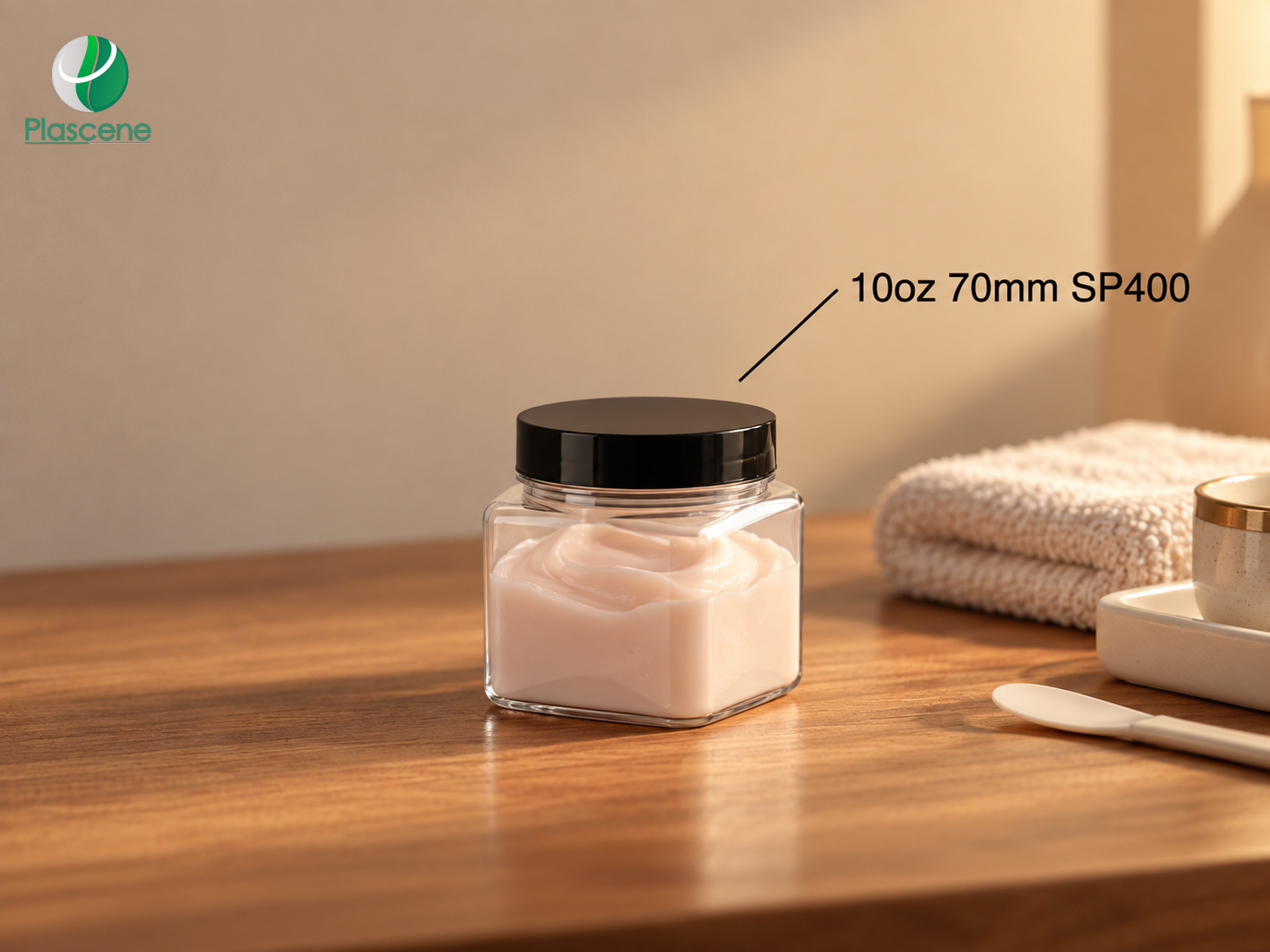
The 63mm and 70mm references cover the more compact end of the Square Jar range, with capacities from 10 oz to 16 oz. Their openings are close enough in scale that the practical difference is usually secondary to the actual jar dimensions, target fill, and closure specification.
These formats work well where the product benefits from direct jar access without requiring the broader footprint of the 89mm or 120mm groups. The square body also gives smaller packages a more structured shelf presence and clearly defined faces for branding and product information.
The 16 oz capacity is available in more than one mold reference, giving buyers additional geometry options within the same general size range. Exact dimensions, label panel, and case fit should be compared against the requirements of the finished package.
| Capacity | 10 oz | 14 oz | 16 oz |
|---|---|---|---|
| Product Page(s) | Ref. P0704 → | Ref. P1226 → |
Ref. P0705 → Ref. P1214 → |
89mm
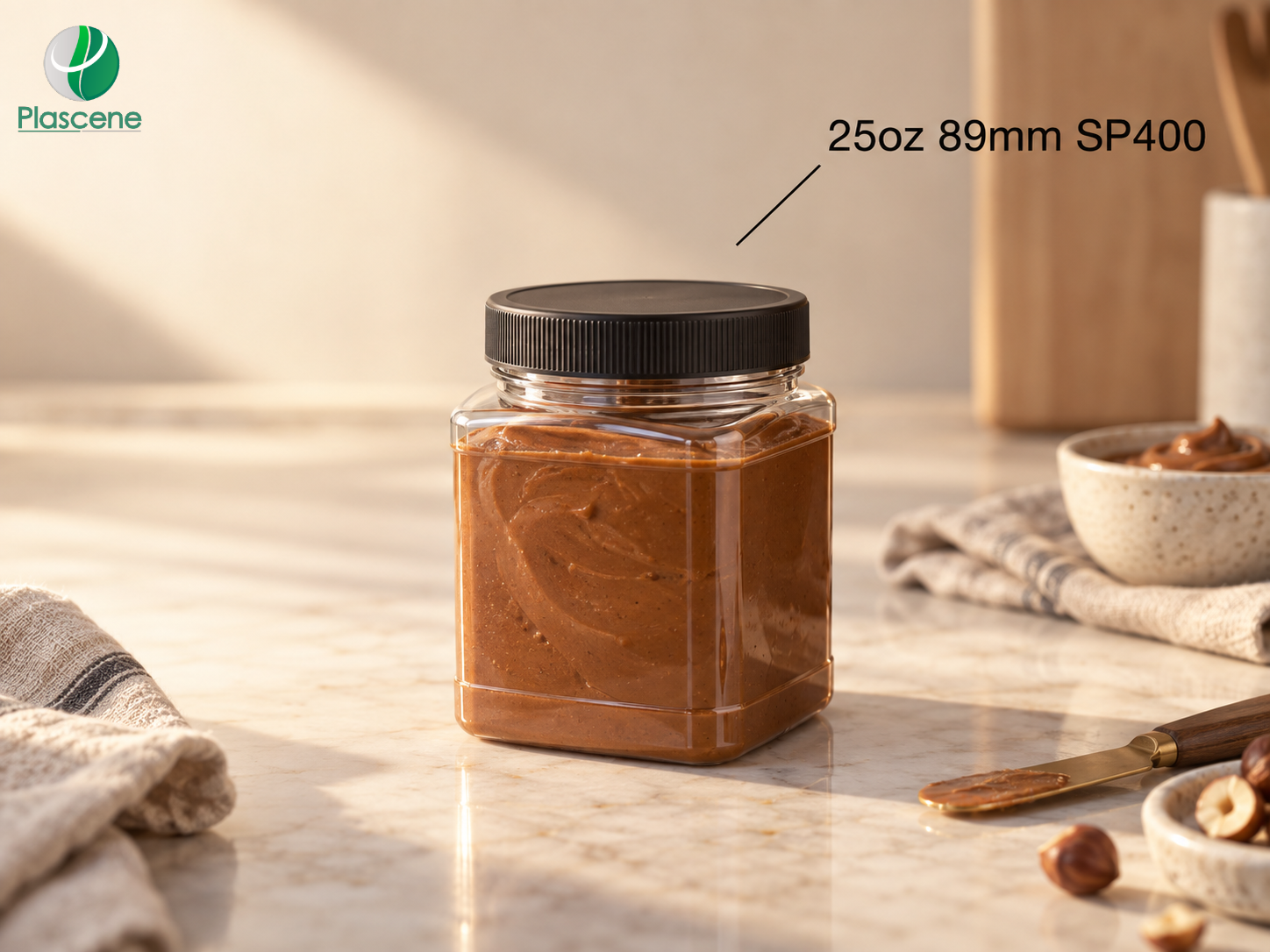
The 89mm group has a distinctly low, wide silhouette that separates it visually from the more compact 63–70mm jars and the much larger 120mm formats. Rather than gaining height as capacity increases, these jars keep a broad, grounded profile that emphasizes direct access and a substantial shelf presence.
This geometry works especially well for products that are scooped, spread, portioned, or accessed by hand. The wide body also creates generous front-facing label space, making the format a natural fit for products where both visibility and easy access are important.
Because several capacities share the same overall low-profile character, buyers can scale the fill while keeping a similar visual language across the line. The main differences between references come down to capacity, diameter, height, and how the jar fits the intended label, closure, and packing setup.
| Capacity | 8 oz | 12 oz | 16 oz | 20 oz | 25 oz | 32 oz |
|---|---|---|---|---|---|---|
| Product Page(s) | Ref. P0693 → | Ref. P0694 → | Ref. P0695 → | Ref. P0696 → | Ref. P0697 → | Ref. P0698 → |
120mm
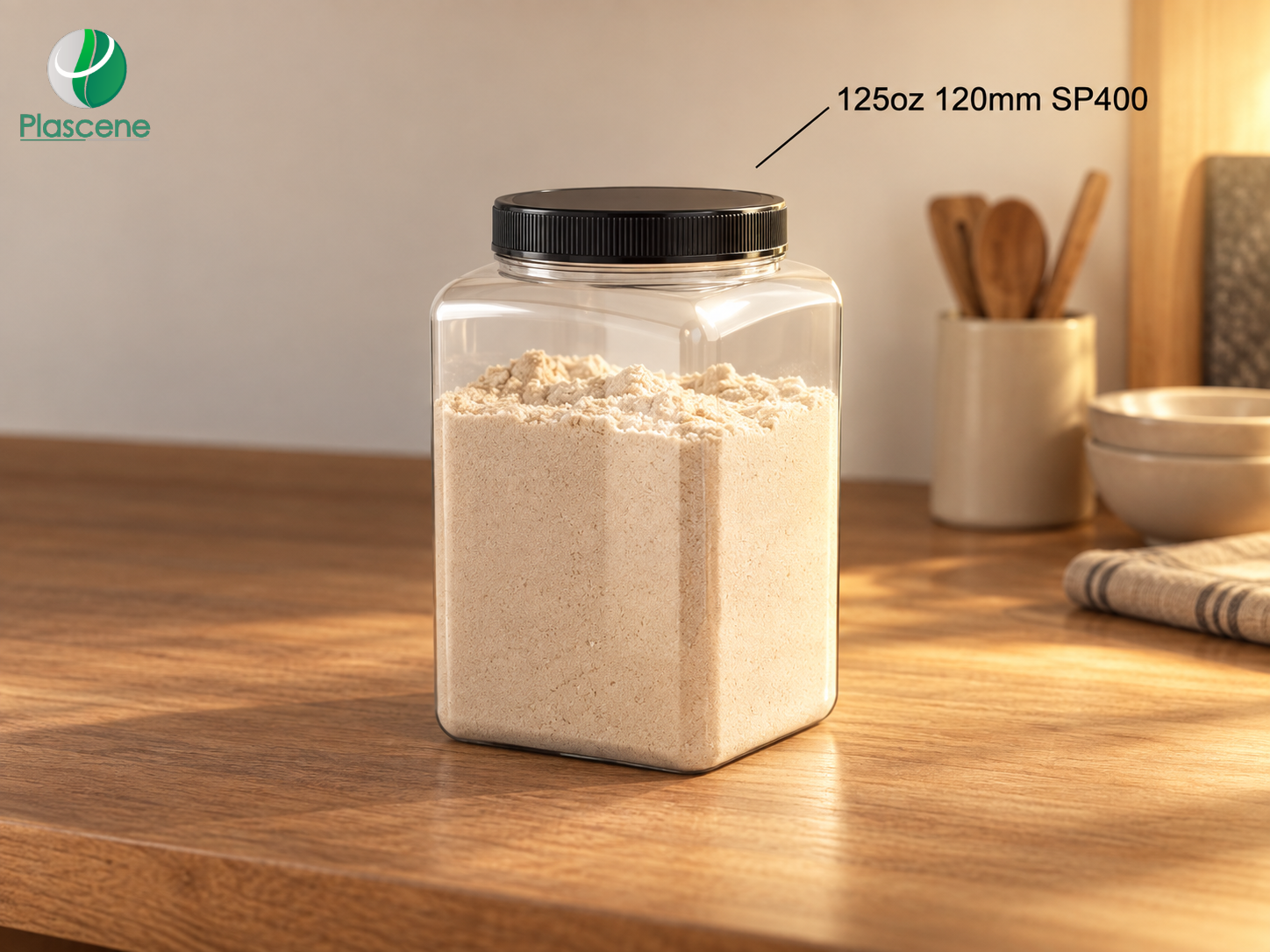
The 120mm jars sit in a completely different size class from the rest of the range. At 100 oz and 125 oz, these are large-format containers designed around substantial fill volume, a very broad opening, and the practical handling needs that come with bulk packaging.
The square geometry becomes particularly useful at this scale, helping the package maintain a structured footprint even as overall dimensions increase. These formats are well suited to bulk powders, dry goods, ingredients, professional-use products, and other fills where several pounds of contents need to remain accessible without giving up the product visibility and lighter handling associated with PET.
| Capacity | 100 oz | 125 oz |
|---|---|---|
| Product Page(s) | Ref. P0811 → | Ref. P1232 → |
Specifications at a glance
| Neck Finish | Capacity Range | Material | Best Suited For |
|---|---|---|---|
| 63mm / 70mm SP400 | 10–16 oz | PET / rPET available | Spreads, creams, balms, confectionery, and smaller specialty fills |
| 89mm SP400 | 8–32 oz | PET / rPET available | Wide-access foods, creams, body care, and scoopable products |
| 120mm SP400 | 100–125 oz | PET / rPET available | Bulk powders, dry goods, ingredients, and professional-size fills |
These applications are general packaging guidelines rather than fixed limitations. Final jar selection should reflect the actual product, target fill, closure specification, dimensions, and packaging-line requirements. If you are comparing nearby references, request a sample to evaluate the jar with your product, label, closure, and packing setup before final specification.
Which PET Square Jar format should you consider?
The Square Jar range is easier to understand by looking at body proportions as well as capacity. The compact 63–70mm references, low-profile 89mm jars, and oversized 120mm formats each create a noticeably different packaging experience, so the right choice depends on how much product needs to be packed and how the finished jar should look, handle, and fit into the packaging environment.
- Compact formats are the most controlled in overall footprint and work well where the package should remain relatively small and easy to handle.
- Low-profile, wide formats emphasize broad access and a grounded shelf presence, making them especially useful when direct product access and a wider presentation are more important than vertical height.
- Oversized formats are built around substantially greater fill volume, with overall dimensions and handling requirements that place them firmly in bulk or professional-use packaging.
The difference between 63mm and 70mm is relatively minor, and the 89mm platform is better understood by its low, wide body geometry than by neck diameter alone. In practice, buyers will usually compare capacity, jar height and width, label area, closure setup, and how the container fits the existing line before focusing on the small differences between nearby neck sizes.
The 120mm jars are the exception because they occupy a much larger physical scale. Their role is less about simply offering a wider opening and more about supporting high-volume fills in a package that remains accessible and structurally straightforward. Ultimately, Plascene provides the range of stock formats, while the final specification should follow the customer’s fill volume, product behavior, packaging setup, and desired presentation.
Custom versions are available at wholesale scale
A square package already brings more shape identity than a conventional round jar, so customization does not always need to begin with a new mold. An existing reference can often be differentiated through color, recycled-content targets, labeling, decoration, or closure selection.
- Stock references provide the most direct route to sampling, qualification, and production.
- Custom color, rPET content, or decoration can change the visual character while retaining the established mold.
- Private-mold development becomes relevant when proprietary dimensions, geometry, or another packaging requirement cannot be addressed through the available stock range.
The appropriate level of customization depends on expected volume, branding requirements, production setup, and how much of the finished container genuinely needs to be unique. Those factors are best established around the actual project during quotation.
A U.S. supply partner — not just a bottle vendor
Packaging decisions for pharmaceutical and supplement brands increasingly come down to more than unit price. With domestic production in Oxnard, California, Plascene offers competitive lead times, closer collaboration on custom projects, and a supply chain built to keep moving when demand tightens. For brands navigating SB 54 and the broader shift toward recycled content, that means a partner who can help plan material strategy through the company’s sustainability program — not just fill a purchase order.


SupplySide Global 2026 – Let’s build packaging that’s ready for 2027

PET Cosmetic Bottles: When Shape Meets Function Across the Beauty Shelf
