


Your Supplier Says “Vertically Integrated.” But What Happens When Supply Gets Tight?


“Vertically integrated.” “One-stop shop.” These phrases appear in nearly every packaging supplier pitch deck. They sound compelling — until a tariff cycle hits, resin goes short, or a capacity crunch ripples through a vendor network held together by purchase orders and goodwill.
At Plascene, we use the same language. But the structure behind it is fundamentally different — and it’s worth showing you exactly what that looks like.
The Problem With Most “Integrated” Suppliers
When most packaging suppliers claim vertical integration, what they mean is this: they have preferred vendors. A resin broker they call first. A tooling shop they’ve worked with for years. A freight partner who usually picks up on time.
That’s not integration. That’s a vendor list.
The difference becomes obvious the moment supply is under pressure. When resin prices spike due to tariff action, a supplier dependent on the open market passes the cost to you — or delays your order. When a tooling partner gets backlogged, lead times stretch. When freight tightens, your production schedule shifts.
The brands that feel this most acutely are those who never saw it coming, because everything looked fine during normal conditions.
How Plascene’s Ecosystem Actually Works
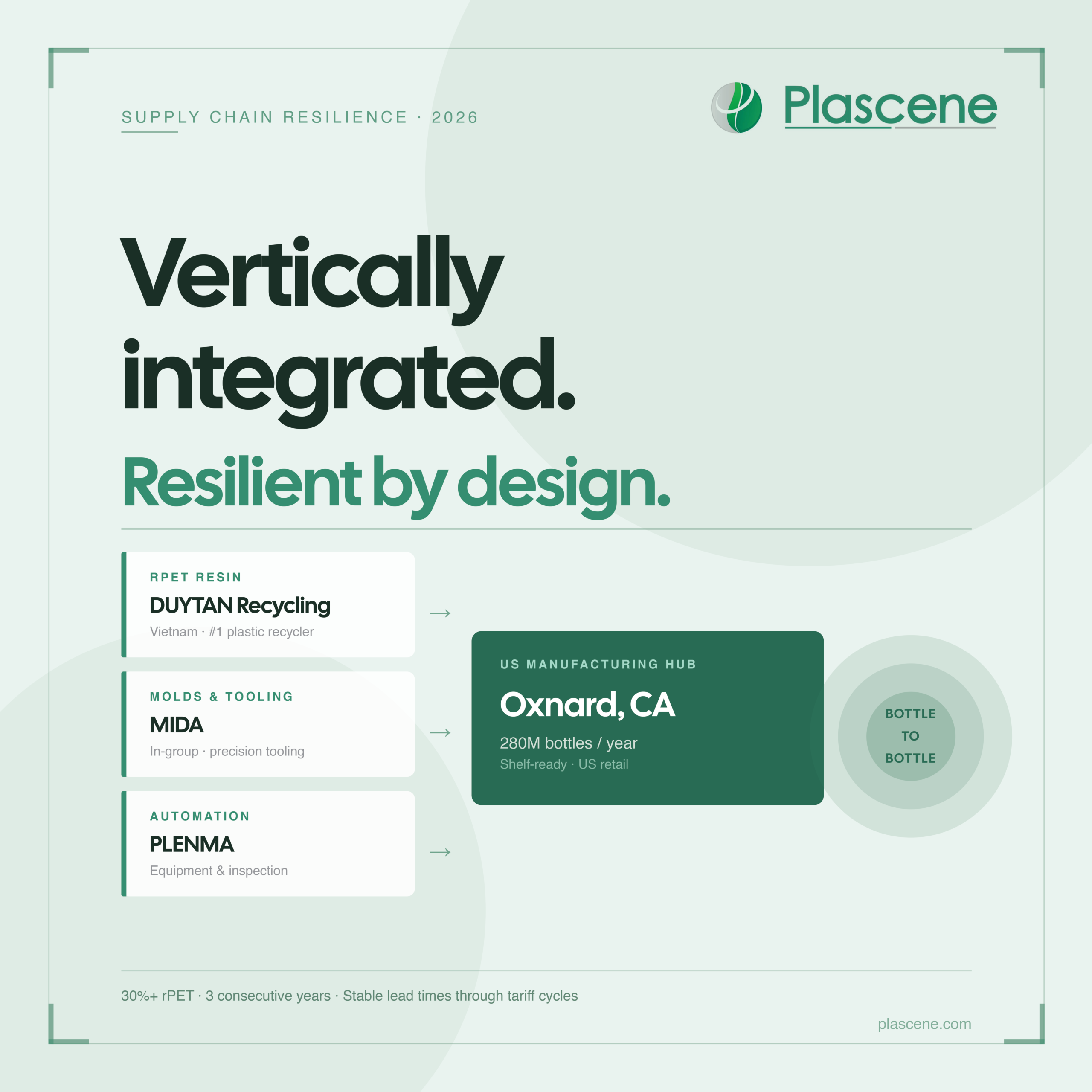
Plascene’s supply chain is built around an in-group ecosystem — not a vendor list. Every critical input is sourced from within a connected group of companies, operating under shared visibility, shared incentives, and direct coordination.
Here’s what that looks like in practice:
rPET Resin — DUYTAN Recycling Plascene sources rPET resin directly from DUYTAN Recycling, Vietnam’s #1 plastic recycler and the first company to commercialize bottle-to-bottle recycling in the country back in 2019. This isn’t a spot-market relationship. It’s a direct, in-group supply arrangement — which means Plascene has real-time visibility into resin availability, pricing, and quality standards before a single pellet ships.
Molds & Tooling — MIDA Custom molds and tooling for Plascene’s bottle and container portfolio come from MIDA, also within the group. This direct relationship means shorter iteration cycles on new product development, tighter dimensional control, and no third-party markups or scheduling conflicts when tooling needs to be adjusted.
Automation & Inspection — PLENMA Manufacturing quality and throughput at the Oxnard, California facility is supported by automation and inspection equipment from PLENMA. In-group equipment sourcing means faster service response, shared technical documentation, and a production floor designed around consistent performance — not the lowest available bid.
All of this feeds into Plascene’s US manufacturing hub in Oxnard, California — producing up to 280 million bottles per year — which then ships shelf-ready product to US retail and brand customers.
What This Has Delivered: Three Years of Data
The in-group ecosystem isn’t a theoretical advantage. It’s measurable.
Plascene has maintained over 30% rPET content across its product base for three consecutive years — 2023, 2024, and 2025. That’s not a one-quarter headline. That’s consistent material performance across tariff cycles, resin market volatility, and shifting US import policy.
Lead times have remained stable through periods that sent other suppliers scrambling. When resin costs shifted due to tariff pressure, Plascene’s direct DUYTAN relationship provided buffer and visibility that open-market buyers simply didn’t have.
This is what supply chain resilience actually looks like — not a press release, but three years of uninterrupted delivery.
The rPET Question Most Brands Get Wrong
Many brands are now under pressure to increase recycled content in their packaging. Some are responding to state-level EPR legislation. Others are responding to retailer sustainability scorecards or brand commitments made publicly.
The common mistake is treating rPET as a specification checkbox: source a supplier who claims rPET content, put it in the sustainability report, move on.
The problem is that rPET content is only as reliable as the supply chain behind it. If your supplier is buying recycled resin on the spot market, their ability to guarantee content percentage fluctuates with availability and price. In tight markets, the rPET percentage drops — quietly.
Plascene’s direct relationship with DUYTAN means the recycled content story is traceable from source to finished bottle. Brands that need to substantiate their sustainability claims — to retailers, to regulators, or to consumers — have the documentation to do it.
American Operations. Vietnamese Ecosystem.
There’s a common misconception that “made in USA” and “globally sourced inputs” are in conflict. They’re not — as long as the sourcing structure is transparent and controlled.
Plascene’s manufacturing is in Oxnard, California. The jobs, the production output, the customer relationships — all US-based. The upstream inputs come from within a Vietnamese industrial group that Plascene has direct equity and operational ties to.
That structure is what makes the resilience real. It’s not outsourcing risk — it’s internalizing the supply chain upstream so that the US manufacturing operation runs without interruption downstream.
A Simple Question Worth Asking Your Current Supplier
When your current supplier describes themselves as vertically integrated, ask them this: What does your supply chain look like when resin is short and tariffs are rising at the same time?
If the answer involves “we have good relationships with our suppliers” — you have your answer.
If they can show you a live diagram of where every input comes from, who owns the relationship, and what the fallback is when any node in the chain is stressed — that’s integration.
At Plascene, we can show you that diagram. And we can back it up with three years of delivery data.
Plascene manufactures rPET and PET bottles and containers at its Oxnard, California facility, serving US brands across nutraceuticals, functional beverage, personal care, and food & beverage. Learn more at plascene.com.


PET Cosmetic Bottles: When Shape Meets Function Across the Beauty Shelf

Secure by Design: PET Tamper Evidence Jars (4 oz – 32 oz)
