


rPET Plastic for Food-Grade Packaging: How Closed-Loop Sourcing Eliminates Supply Chain Risk


Beyond Sustainability: Ensuring Supply Chain Reliability with rPET Plastic Solutions
Imagine this scenario: Your procurement team finally secures a consistent rPET supplier. Six months into production, a random batch fails a critical Food and Drug Administration (FDA) compliance audit, or worse, inconsistent resin quality causes your high-speed molding line to grind to a halt. In the B2B world, the real “nightmare” isn’t just price—it’s the hidden cost of a fragile supply chain.
Plascene understand that sustainability is meaningless without reliability. That is why our closed-loop rPET plastic recycling process is designed not just to “be green,” but to eliminate the technical and regulatory risks that keep procurement managers up at night.

The rPET Plastic Compliance Gap: Why Not All Recycled Plastic Is Food-Safe
One of the most common misconceptions in the industry is that all rPET is created equal. However, there is a significant “compliance gap” between standard recycled plastic and food-grade plastic.
Standard rPET often contains residual contaminants from its previous life—labels, adhesives, or non-food liquids—that can migrate into products. To be classified as food-grade plastic, the resin must undergo an intensive purification process that meets the strict non-objection standards set by the FDA. Choosing a supplier that cannot bridge this gap puts your brand at risk of recalls and legal liability.
The 7-Step Technical Audit: A Commitment to Food-Grade Quality
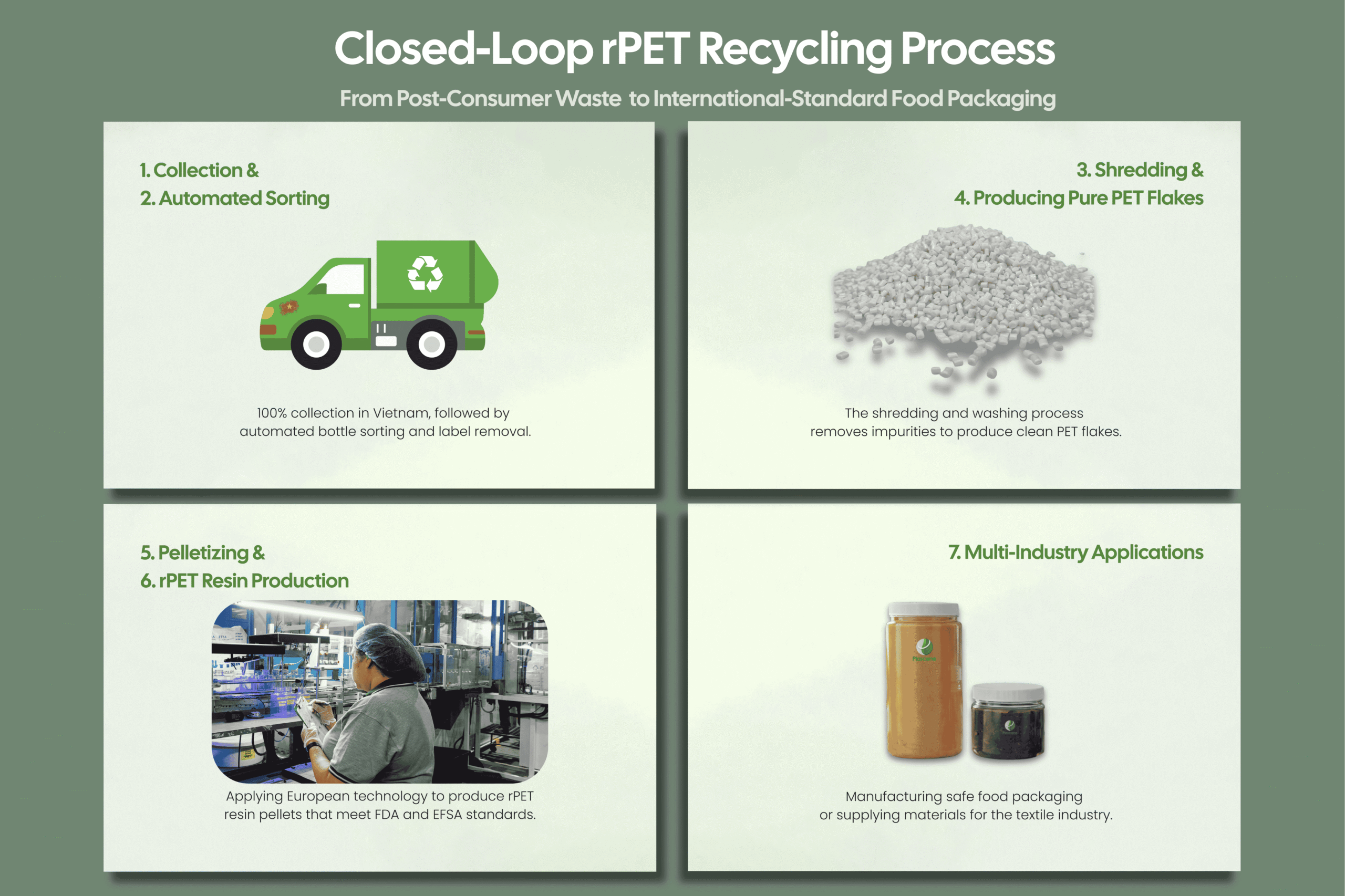
Our process is a rigorous series of technical checkpoints, ensuring every ounce of resin meets the highest industry standards:
-
Strategic Source Control & Sorting: Advanced automated sorting systems ensure raw material consistency from the start.
-
Intensive Decontamination: High-tech shredding and washing systems produce pure flakes—the foundation for food-grade applications.
-
European SSP & Pelletizing: Solid State Polymerization (SSP) is a sophisticated thermal process used to increase the molecular weight and Intrinsic Viscosity (IV) of the plastic. In this stage, the polymer pellets are heated under a vacuum or an inert gas environment.
-
Why is SSP critical? It effectively “repairs” the polymer chains that were damaged during the initial recycling steps and removes deeply embedded volatile organic compounds. This ensures the rPET remains stable, preventing brittle bottles and ensuring smooth performance on your production lines.
-
-
Final Application: This high-purity resin is molded into premium containers, from Polyethylene Terephthalate (PET) bottles to wide-mouth jars.
rPET vs. Virgin PET: The Procurement Case Beyond ESG
While Environmental, Social, and Governance (ESG) goals often drive the switch to rPET plastic, the procurement case is also about supply chain resilience. As global regulations tighten and Virgin PET resin tariffs fluctuate, domestic rPET plastic provides a more predictable cost structure.
By diversifying your sourcing to include high-quality food-grade plastic, you reduce exposure to international resin market volatility while simultaneously satisfying consumer demand for sustainable, circular-economy products.
What Makes an rPET Supplier Qualified for Food-Grade Applications?
We focus on the critical pillars of qualification that B2B buyers require:
-
Strict Regulatory Compliance: We prioritize materials that strictly adhere to FDA, European Food Safety Authority (EFSA), and International Organization for Standardization (ISO) standards.
-
Physical Property Integrity: Through the SSP process, we protect the resin’s technical properties, ensuring packaging maintains structural integrity during high-speed filling.
-
Full Traceability: Every batch comes with transparent documentation, providing the data your legal and quality teams require.
Industries We Serve: Specialized Food-Grade Plastic Solutions
As a premier PET plastic jar manufacturer and plastic food container supplier, Plascene provides specialized solutions across diverse sectors:
-
Food and Beverage (F&B): We offer Hot-Fill PET bottles and High-Pressure Processing (HPP) ready containers. Our preforms are engineered for beverage brands requiring extreme clarity and oxygen barrier properties to extend shelf life without preservatives.
-
Health and Beauty: Our high-clarity rPET jars provide the premium aesthetic of glass with the durability of plastic. These are ideal for luxury skin care and hair care brands looking to meet sustainability mandates without sacrificing “shelf-appeal.”
-
Sports and Nutrition: We specialize in large-format jars for protein powders and supplements. Our Tamper-Evident (TE) jars ensure consumer safety while our robust engineering prevents cracks during cross-country shipping.
- Pharmaceutical: Delivering FDA-approved plastic solutions that meet stringent safety standards for over-the-counter (OTC) medications and vitamins.
Strategic Sourcing: Minimizing Volatility with US-Based Support
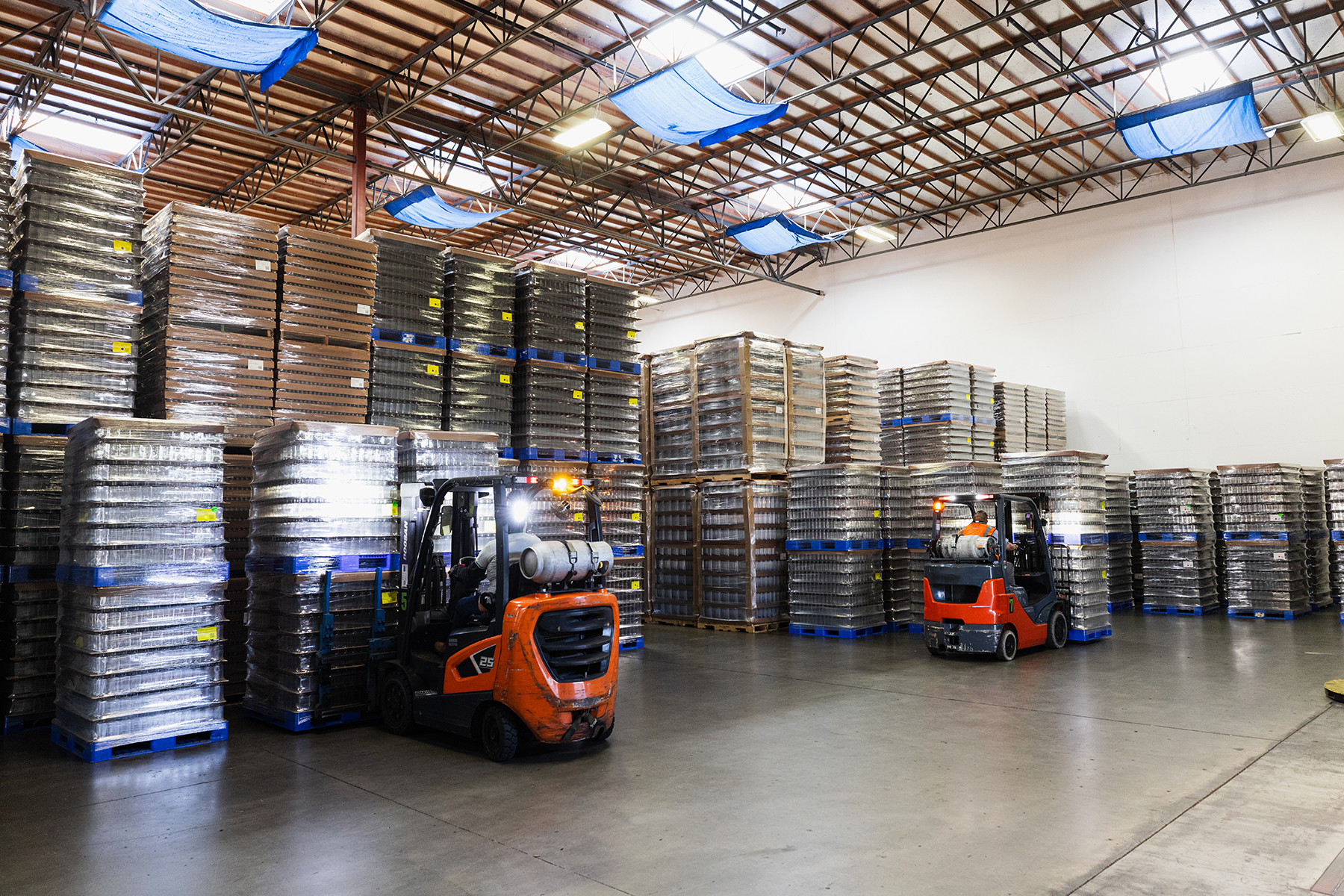
Geopolitics and shipping delays are the enemies of a lean supply chain. By partnering with a United States (US)-based distribution and fulfillment partner like Plascene, you significantly reduce exposure to international volatility. Our strategic presence in California allows us to provide localized solutions, ensuring your On-Time, In-Full (OTIF) performance remains predictable.
Conclusion: Don’t Leave Your Supply Chain to Chance
Transitioning to rPET plastic doesn’t have to mean compromising on quality. Plascene provides the technical foundation you need to scale sustainably.
Take the next step in securing your packaging future:


SupplySide Global 2026 – Let’s build packaging that’s ready for 2027

PET Cosmetic Bottles: When Shape Meets Function Across the Beauty Shelf
