


Stability Enables Sustainability


The sustainability commitments that brands make publicly are only as credible as the supply chains that back them. A recycled content target written into a corporate ESG report is straightforward to announce. Actually meeting it — at scale, consistently, across regulatory environments — requires a packaging partner with the financial durability, technical depth, and operational discipline to deliver year after year.
You cannot build a green future on a shaky foundation. Yet that is precisely what many brands are attempting — making public commitments to recycled content while sourcing from suppliers whose own financial instability introduces disruptions that make those commitments impossible to honour. At Plascene, sustainability is an engineering and operational commitment backed by $60M of infrastructure investment and the financial discipline to maintain that capability over the long term.
“True sustainability requires long-term financial discipline. The companies that will genuinely deliver on their circular economy goals are those with the stability to keep investing through cycles — not just when conditions are favourable.”
The Regulatory Landscape Is Accelerating
The direction of recycled content mandates is unambiguous. California’s AB 793 and the EU Packaging and Packaging Waste Regulation set requirements that escalate over time. For brands with global distribution, meeting these is not optional. The question is whether their supply chain is positioned to support compliance or whether they will face last-minute scrambles in a constrained market. Brands that plan ahead with partners already producing compliant materials at scale will have a structural advantage.
Our Integrated Sustainability Infrastructure
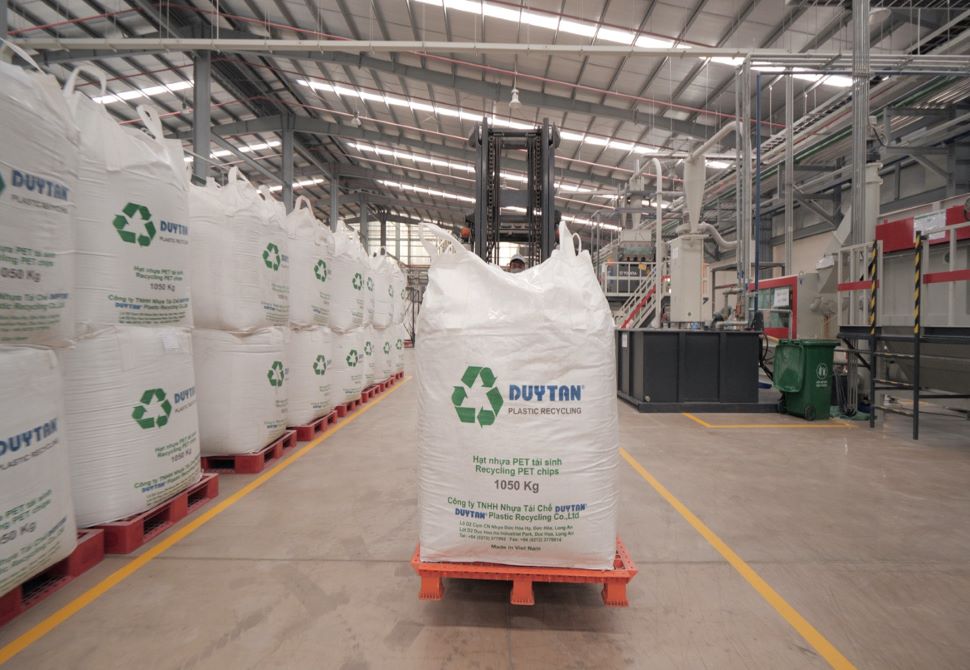
Plascene’s sustainability capability is built into our own operations — from material collection through to finished food-grade rPET resin. This vertical integration enables us to deliver on our commitments.
-
Responsible Capital Allocation: Our $60M investment in the Long An recycling facility reflects a conviction that the transition to circular packaging is structural. We continue to invest in expansion as a long-term strategy, not just short-term compliance.
-
Technical Rigour in PCR/rPET Blending: Post-consumer recycled PET is technically demanding. Our technical team has developed blending protocols that deliver consistent food-contact-safe output despite fluctuations in feedstock quality.
-
Operational Consistency Across the Lifecycle: Sustainability requires consistent execution across every production run. Our quality management system ensures the rPET resin we deliver today meets the same standard years from now.
FDA, EFSA, and the Standard of Proof
For food and beverage brands, the bar is food-contact compliance. Our rPET resin meets both FDA and EFSA food-contact standards. This technical proof distinguishes genuine capability from aspirational positioning, allowing our clients to incorporate rPET with regulatory confidence in global markets.
-
FDA: Compliant – Food-grade rPET for North American markets.
-
EFSA: Certified – Food-contact approval for European markets.
-
AB 793: Ready – Supports California recycled content mandates.
The Long View
The brands that will lead on sustainability are those with supply chain partners capable of making targets real. This requires a partner who has invested ahead of demand, possesses technical depth, and has the financial stability to maintain investment through every market cycle. That is what Plascene offers — sustainability as an operational commitment.
Partner with a company that has the stability to make your sustainability goals a reality.
Comment


Other articles

Pharmaceutical Plastic Bottles: What US Brands Need From Their Packaging Partner
Sourcing the right pharmaceutical plastic bottles is one of…


Predictability in an Unpredictable World: Supply chain uncertainty creates hesitation. At Plascene, we turn “What if?” into “What’s next.”
Managing the Inherent Uncertainty
Every supply chain…