


Sports Nutrition Packaging: Scaling Your Brand with Agile Solutions in 2026


The Sports Nutrition Packaging Market
The U.S. sports nutrition market is no longer a niche segment — it is a $29.4 billion industry growing at a compound annual rate of 7.4% through 2033, according to Grand View Research. Globally, the category reached $71.55 billion in 2025 and is projected to hit $77.35 billion by the end of 2026, with North America commanding nearly half of all worldwide revenue.
For brand owners and procurement managers, this rapid expansion creates a high-stakes operational challenge: how to synchronize packaging supply with volatile market demand without drowning in logistics costs. In an era where speed-to-shelf determines market share, your choice of sports nutrition packaging partner is the most critical link in your supply chain.
The 14-Day Strategic Buffer: Redefining Your Packaging Supply Chain
In the competitive landscape of plastic bottle manufacturers, the gap between production completion and filling schedules can quietly erode margins. Demurrage fees, last-minute external warehouse rentals, and disrupted cash flow are the hidden costs that rarely appear in a supplier’s pitch deck — but consistently appear on your P&L.
Plascene addresses this directly with a 14-day free warehousing period at our Oxnard, California facility. This is not a peripheral add-on. It is a strategic buffer built into the supply chain partnership.
What this means in practice for your brand:
-
Optimized working capital: Goods are production-ready and secured at our facility while you finalize filling logistics — without paying West Coast warehouse rates.
-
Eliminated hidden costs: No demurrage at port, no short-term third-party storage fees, no emergency freight coordination.
-
Supply chain flexibility: Buffer inventory allows brands to respond to demand spikes without emergency reorders that compromise quality lead times.
For high-growth supplement brands managing multiple SKUs and seasonal demand cycles, this operational flexibility is a measurable competitive advantage.
Technical Excellence: Why PET Outperforms for Sports Nutrition
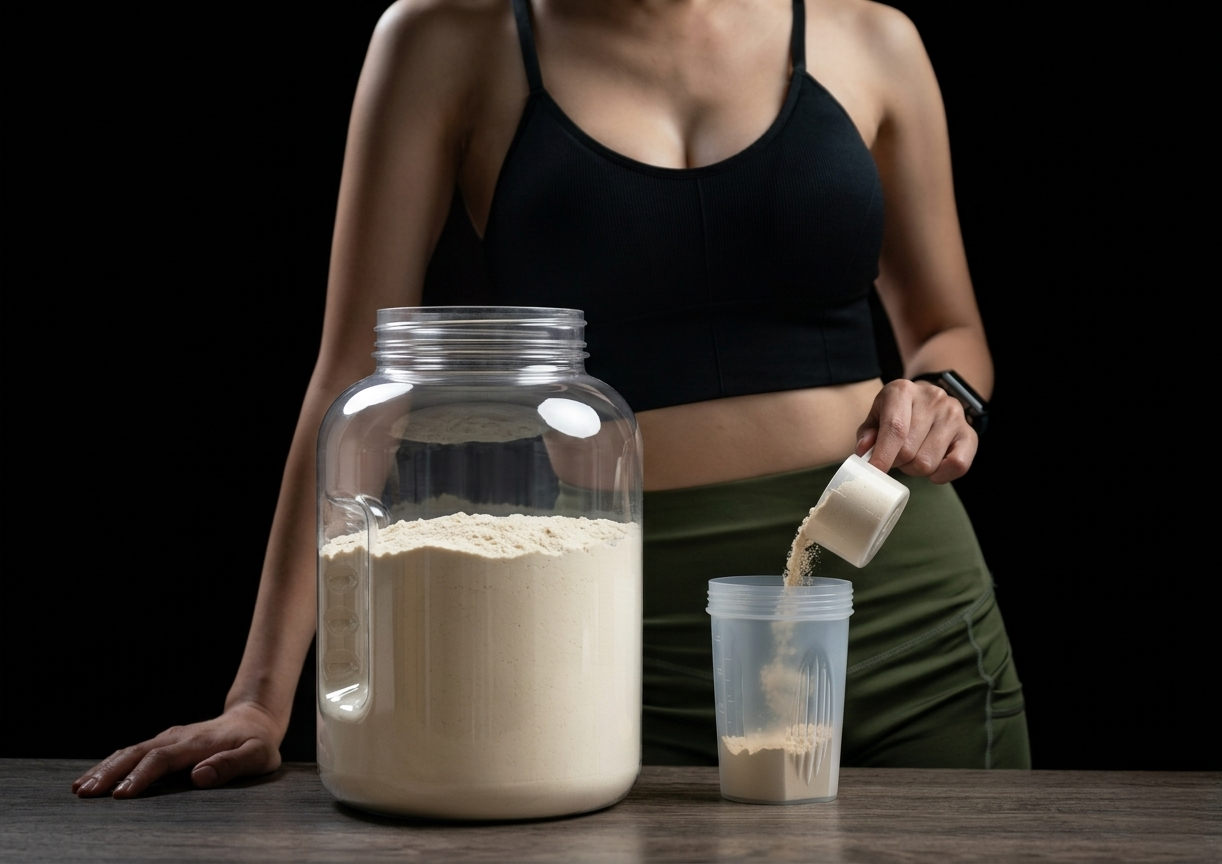
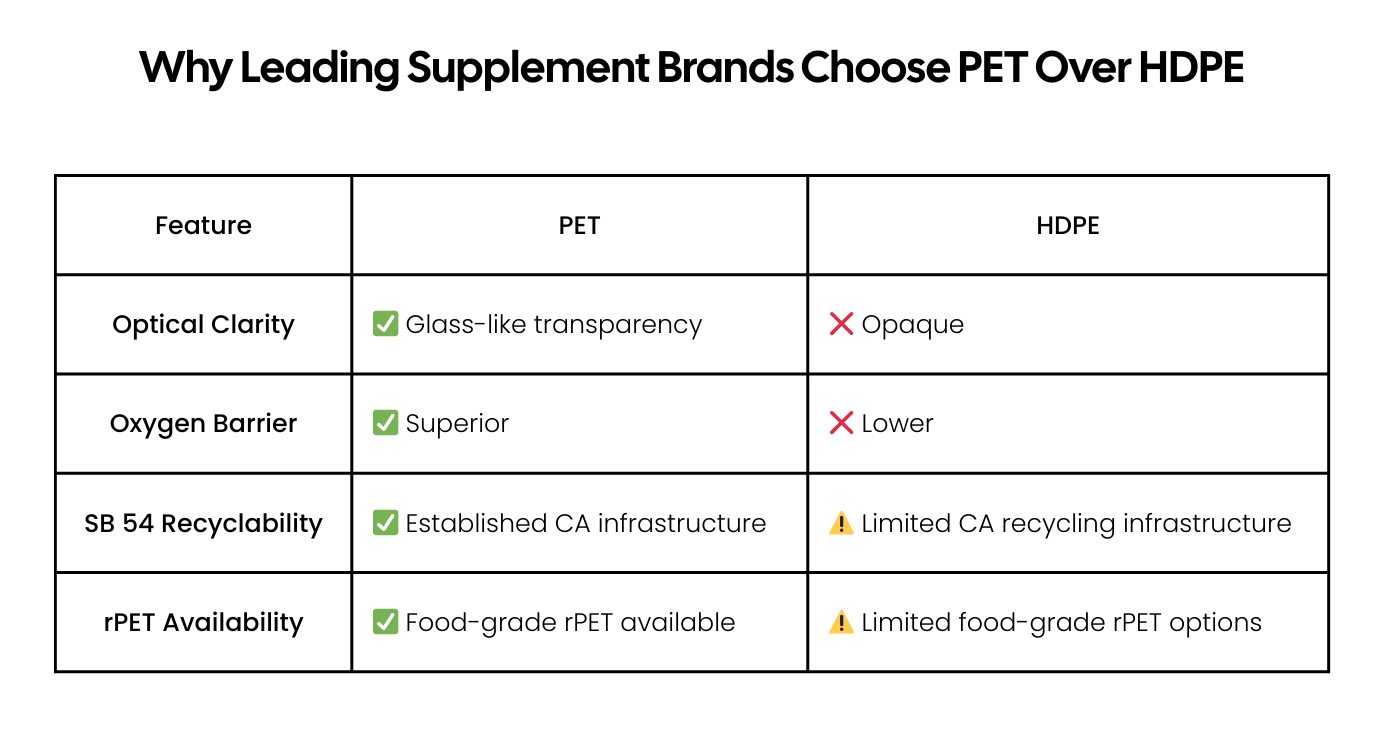
When evaluating packaging materials for supplements — protein powders, pre-workouts, amino acids, creatine — the decision between PET and HDPE comes down to three factors that drive both retail success and regulatory compliance.
Transparency & Shelf Appeal
PET delivers superior optical clarity, often described as “glass-like.” This allows the vibrant colors of pre-workout formulas and amino acid blends to be visible through the container — a direct influence on impulse purchase decisions at retail. HDPE is inherently opaque, limiting visual merchandising options.
Oxygen Barrier Properties
PET is significantly more effective than HDPE at preventing oxygen ingress. For sensitive nutritional compounds — particularly whey protein isolates and unstabilized amino acids — oxygen permeation accelerates degradation and reduces effective shelf life. PET’s superior oxygen barrier properties protect both product potency and brand reputation.
California SB 54 Compliance
Under California’s SB 54 legislation, all single-use packaging sold in California must be fully recyclable or compostable by 2032, with interim reduction targets beginning earlier. PET benefits from a mature, well-established recycling infrastructure in California — making it significantly easier for brands to demonstrate compliance compared to materials with lower recycling rates.
A note for brands planning ahead: In January 2026, CalRecycle issued a proposal withdrawal to revise the regulatory definitions of “recyclable” and “compostable” under SB 54. The core legislation remains in effect, but specific compliance definitions are being refined. Plascene monitors these legislative developments closely. Our FDA-approved plastic ensures your brand remains ahead of evolving safety and environmental standards as the regulatory landscape continues to develop.
The Made in USA Advantage: Transparency Built Into the Process
In B2B packaging, trust is not built through marketing language. It is built through verifiable operational transparency.
Many suppliers marketing themselves as “U.S.-based” are in practice importing preforms or finished components from overseas, then assembling or rebranding domestically. This introduces lead time variability, quality control gaps, and supply chain risk that brands often do not discover until an order is already late.
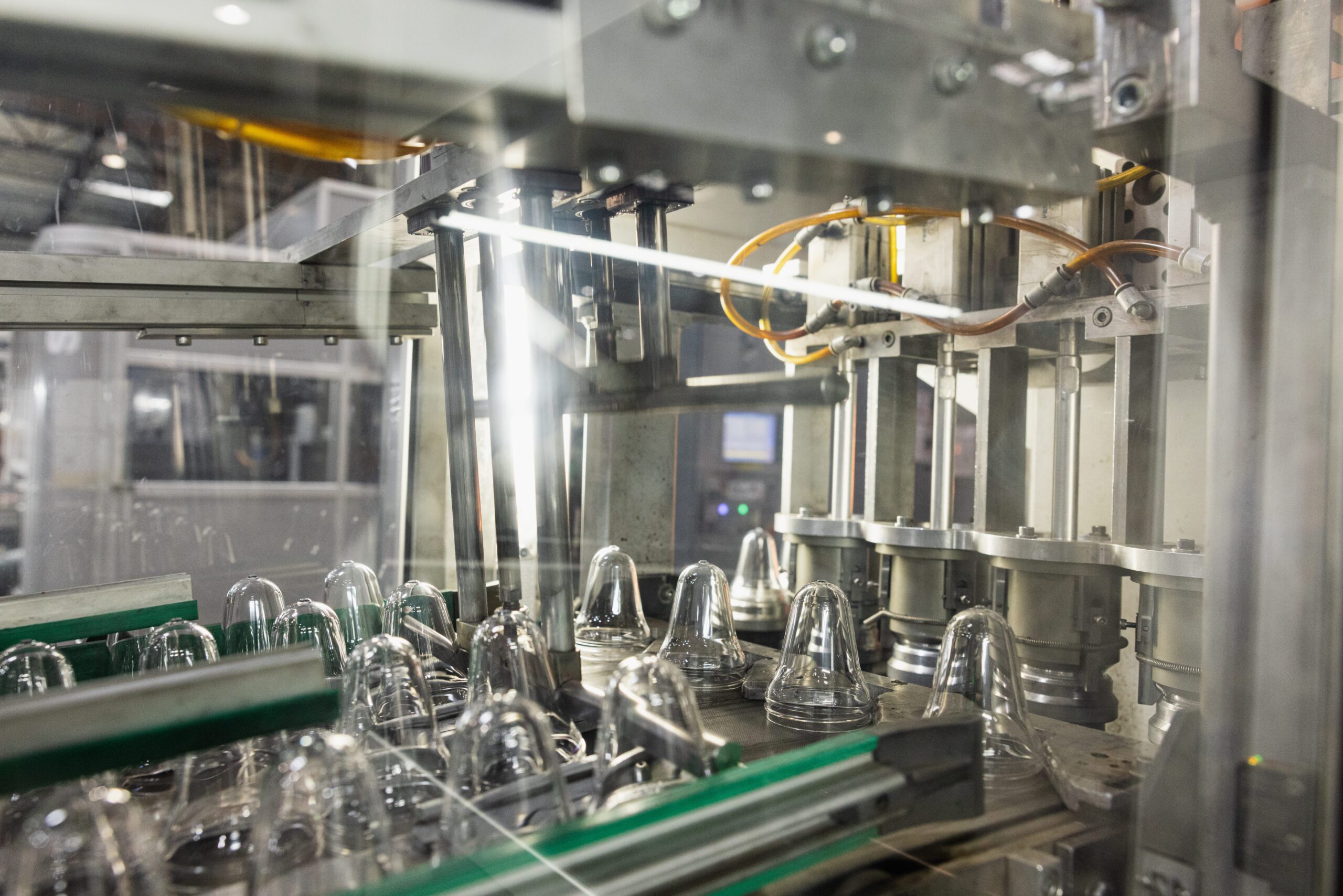
We maintain operational control at our Oxnard, California facility, including ownership of the complete two-step blow molding process from raw resin to finished bottle.
We invite our partners to conduct factory audits at any time. By owning the two-step blow molding process from resin to finished bottle, we ensure a level of quality control and operational transparency that importers simply cannot match. This is how we maintain consistently high OTIF (On-Time In-Full) performance across our customer base.
The ability to invite a prospective partner to walk the production floor — unannounced, at any point — is the kind of transparency that contract importers structurally cannot offer. For brands operating under FDA oversight and managing supplement quality claims, knowing exactly where and how your container was manufactured is not optional.
Caps and Closures: The Final Seal of Quality
For a supplement user, the brand experience does not begin when the product is consumed. It begins with the first interaction with the container — specifically, the tactile feedback of opening the lid after a workout, often one-handed, often with limited dexterity.
A high-end protein tub with a loose or awkward closure undermines the entire premium positioning the brand has invested in building.
Plascene’s specialized caps and closures, including induction seal technology, serve a dual function in the sports nutrition category:
-
Product integrity: Induction seals create an airtight, tamper-evident barrier that protects MVTR performance and preserves product freshness from production to first use.
-
Brand trust signal: A clean, intact induction seal communicates to the consumer that the product has not been tampered with — a meaningful factor in a category where product safety is a baseline expectation, not a differentiator.
The seal is the last step in your manufacturing process and the first thing your customer notices. It deserves the same specification attention as the container itself.
Conclusion: Ready to Scale?
In 2026, the sports nutrition brands that will capture market share are those that treat packaging not as a commodity procurement decision, but as a supply chain and brand strategy lever.
Plascene offers U.S.-manufactured PET and rPET sports nutrition packaging with the technical specifications, sustainability credentials, and operational flexibility — including 14-day free warehousing — to support brands at any stage of growth.
Comment


Other articles

PET Round Finger Grip Jars: Built for Confident Handling (64 – 256 oz)
.pls-article {
–pls-green: #3B8E70;
…

PET Pinch Grip Jars: The Solution for Superior Bulk Packaging (32 oz – 128 oz)
.pls-article {
–pls-green: #3B8E70;
…

4 Types of PET Condiment Jars: The Ultimate Shelf Appeal
.pls-article {
–pls-green: #3B8E70;
…