


Pharmaceutical Plastic Bottles: What US Brands Need From Their Packaging Partner


Sourcing the right pharmaceutical plastic bottles is one of the most consequential decisions a US brand owner will make — and one of the most underestimated. In the pharmaceutical world, the bottle is not just a container. It is the final, most critical layer of protection between your carefully crafted formula and a host of environmental threats — moisture, oxygen, light, and tampering.
Choosing the wrong packaging partner does not just impact your bottom line through shipping delays or quality issues. It can lead to the ultimate nightmare for any brand: a product recall.
According to a January 2026 report from Mordor Intelligence, the global pharmaceutical plastic bottles market is currently valued at $9.98 billion and is projected to reach $12.08 billion by 2031, growing at a steady CAGR of 3.92%. Notably, North America commanded 39.55% of the global market share in 2025 — nearly $4 billion in demand from this region alone.
As competition intensifies, US brands are increasingly asking: “What should I actually look for when sourcing pharmaceutical plastic bottles in 2026?”
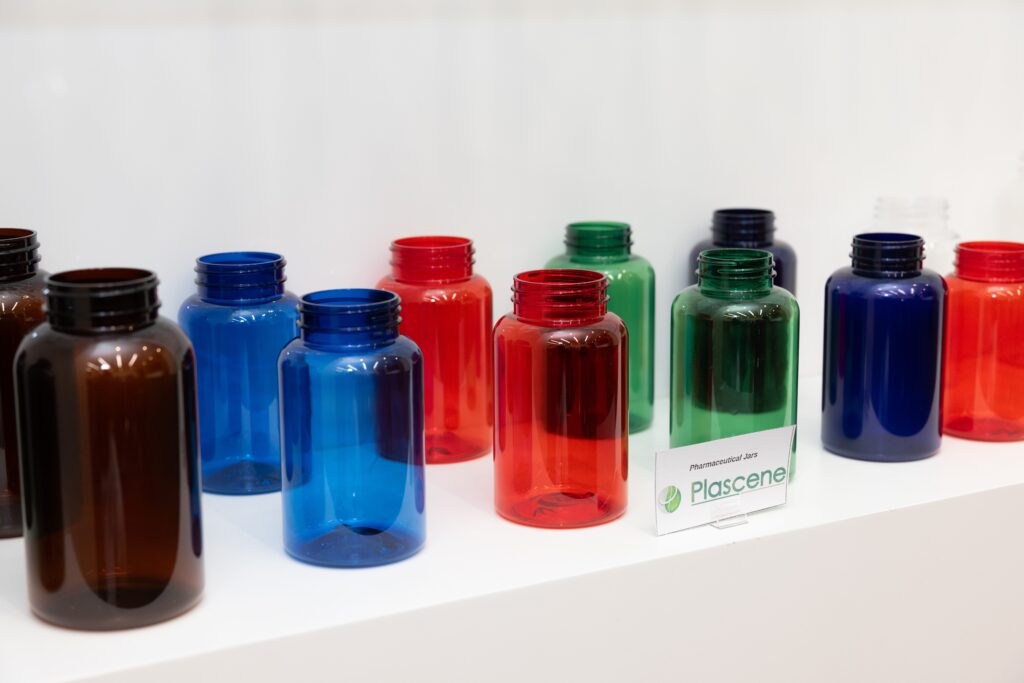
What Makes Pharmaceutical Plastic Bottles “Grade-Ready”?
When sourcing containers, you will often hear the term “pharmaceutical grade plastic.” While it sounds like high-level industry jargon, the concept is straightforward for any brand owner to understand.
Think of it like choosing a food container. You want to be certain that the plastic will not leak chemicals into your meal or change the way it smells. In the pharmaceutical world, these standards are significantly stricter. A pharmaceutical-grade bottle is manufactured using controlled resins that meet three core criteria:
-
Non-reactive: The plastic is chemically inert — meaning it will not react with liquid vitamins, oils, or medicated syrups stored inside.
-
Contamination-free: Designed as a safe plastic for medicine, ensuring that no plastic odors or microscopic particles migrate into tablets or powders over time.
-
Storage-resistant: Maintains its structural integrity under varying warehouse temperatures and humidity levels throughout its shelf life.
At Plascene, FDA approved plastic bottles are our manufacturing baseline — the simplest and most reliable indicator for a procurement team to confirm that the material is safe for human consumption and compliant with US standards.
Child-Resistant & Tamper-Evident: The Two Features Every Pharma Brand Needs
For brands sourcing pharmaceutical plastic bottles in the US, child-resistant closures are not optional. If you are a brand owner, your customer’s first experience with your product is not the taste of the supplement or the effectiveness of the medicine. It is the moment they try to open the bottle. This is where caps and closures play a vital role in both safety and brand trust.
Child-Resistant Packaging
In the United States, child-resistant packaging is a legal requirement for many over-the-counter (OTC) and prescription medications, regulated by the Consumer Product Safety Commission (CPSC). These caps are engineered to be significantly difficult for a child under five to open, while remaining easily accessible for a normal adult.
High-quality child-resistant closures from a reliable manufacturer ensure your brand stays compliant with federal regulations while protecting families — removing a significant liability risk from your supply chain.
Tamper-Evident Features
In the era of e-commerce and multi-step supply chains, a product may pass through several hands before reaching the consumer. Tamper proof medicine bottles use features such as induction seals or breakaway plastic rings to address this directly.
For the buyer, this is a powerful trust signal. An intact seal tells the customer that the product is exactly as the manufacturer intended — fresh, uncompromised, and safe. A broken or missing seal, by contrast, leads to immediate returns and lasting damage to brand reputation.
Plascene’s induction seal technology provides a hermetic, airtight barrier that delivers both tamper evidence and shelf-life stability in a single solution.
Why “FDA Inspection-Ready” Manufacturing Matters More Than “Made in USA”
Many suppliers present themselves as a US-based pharmaceutical bottle manufacturer, but in reality operate as middlemen importing preforms from overseas. For a high-stakes industry like pharmaceuticals, this creates a critical blind spot.
The FDA can and does audit packaging suppliers as part of a drug manufacturer’s quality review process. If a packaging facility cannot meet FDA inspection standards, the entire drug product line it supports can be placed at risk — including potential holds, recalls, and regulatory action against the brand itself.
Plascene differentiates itself by being genuinely FDA inspection-ready at all times.
Our facility in Oxnard, California maintains 100% operational control over the entire production process — from raw resin to finished bottle. Our two-step blow molding process is performed entirely on-site, eliminating the risks associated with third-party handling and overseas preform sourcing. There are no blind spots in our production chain.
When you partner with Plascene, you are not simply buying a bottle. You are buying the assurance that your packaging supplier can withstand the same level of scrutiny your formula does.
PET vs HDPE for Pharmaceutical Bottles: A Quick Guide
Choosing between PET and HDPE is one of the most common questions from procurement teams entering the pharmaceutical packaging category. Both are proven pharmaceutical grade plastics — but they serve different product needs.
PET
- Clarity: Glass-like transparency — ideal for shelf appeal and brand presentation
- Oxygen Barrier: Excellent — protects sensitive formulas from oxidation
- Light Protection: Requires amber or opaque tinting for light-sensitive medications
- Moisture Barrier: Good — suitable for most liquid and tablet formats
- Sustainability: Food-grade rPET widely available — supports SB 54 compliance goals
HDPE
- Clarity: Opaque — product not visible inside
- Oxygen Barrier: Lower than PET
- Light Protection: Naturally blocks more light than clear PET
- Moisture Barrier: Excellent — the preferred choice for powder-based formulations
- Sustainability: Recycling infrastructure more limited
Which one is right for your formula?
For liquid vitamins, softgels, or premium supplements, where capsule color and shelf visibility contribute to brand appeal — PET is the clear choice. For powder-based formulations that are highly sensitive to moisture — HDPE remains the more protective option.
Plascene manufactures both. Our team works directly with brand owners and procurement managers to recommend the right material based on your specific formula, storage conditions, and sustainability requirements.
Conclusion: Ready to Protect Your Formula?
Selecting the right pharmaceutical plastic bottles starts with choosing a partner who understands both safety and supply chain.
In 2026, the pharmaceutical brands that earn lasting consumer trust are those that treat packaging as a quality decision — not a cost decision. The bottle on the pharmacy shelf is the last thing your team controls and the first thing your customer sees.
From our FDA-ready manufacturing facility in Oxnard to our specialized child-resistant closures and sustainable rPET options, Plascene is built to support your formula from the production line to the pharmacy shelf.
Ready to source pharmaceutical plastic bottles that meet US compliance standards?
Comment


Other articles

Stability Enables Sustainability: You can’t build a green future on a shaky foundation. Long-term discipline makes circular packaging real.
The Foundation of Green Commitments
The sustainability…

Financial Strength in Action: While others scale back, Plascene scales up — deliberately, measurably, and in step with what clients need.
Demonstrating Stability Through Action
Financial strength…

Predictability in an Unpredictable World: Supply chain uncertainty creates hesitation. At Plascene, we turn “What if?” into “What’s next.”
Managing the Inherent Uncertainty
Every supply chain…