


Why Your Strategic Pharmaceutical Plastic Bottle Manufacturer is Key to a Lean Supply Chain in 2026


When sourcing for your brand, choosing the right pharmaceutical plastic bottle manufacturer goes beyond finding the lowest price. The right partner ensures your packaging protects product stability, maintains strict regulatory compliance, and builds lasting customer trust.
Explore how strategic sourcing can optimize your supply chain and safeguard your pharmaceutical or supplement integrity.
Why Material Quality Matters
Most pharmaceutical bottles today are made from PET plastic – and for good reason. PET provides excellent protection against moisture and oxygen, which is critical for maintaining drug stability. But there’s an important shift happening in the industry.
More manufacturers are now using recycled PET (rPET) instead of virgin plastic. This isn’t just about being environmentally friendly – it’s about meeting consumer expectations and regulatory requirements. The good news? When processed correctly, rPET performs just as well as virgin PET while reducing your environmental footprint.
What to look for: Make sure your supplier can provide FDA compliance documentation for their materials. High-quality rPET should maintain the same clarity and strength as virgin PET – there should be no compromise on safety or quality.
Understanding Bottle Sizes and Styles
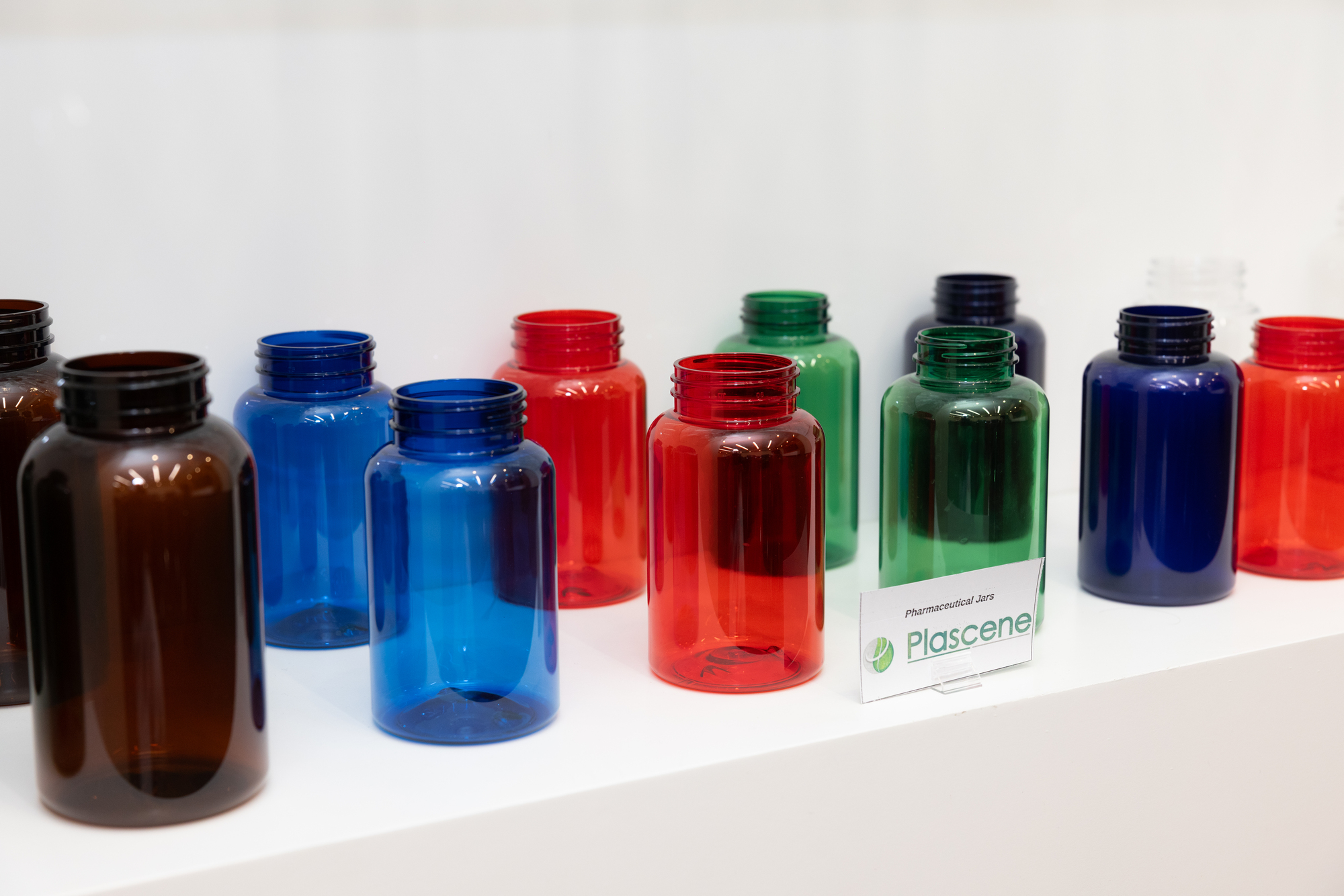
In the pharmaceutical world, you’ll often hear the term “Packer” – these are wide-mouth bottles designed for easy filling and dispensing of pills, capsules, and tablets. As an experienced pharmaceutical plastic bottle manufacturer, Plascene knows the key is choosing the right size for your specific product needs.
- Small sizes (160cc-250cc): Perfect for 30-day supplies or travel-sized products. For example, a 200cc packer jar works well for a month’s supply of vitamins.
- Medium sizes (300cc-500cc): The workhorses of the supplement industry. These handle 3-6 month supplies efficiently. Check out options like 400cc or 500cc packer jars for standard retail sizes.
- Large sizes (625cc-950cc): Best for bulk purchases and family-size products. If you’re selling large softgels or bulk multivitamins, sizes like 750cc or 950cc provide the capacity you need.
Pro tip: Round bottles are standard and work with most automated filling equipment. But if shelf space is tight, consider oblong shapes – they can fit 25-30% more units on the same shelf. Plascene’s oblong packer is a good example of this space-saving design.
Getting the Neck Finish Right
This might sound technical, but it’s crucial: your bottle neck must match your cap. The pharmaceutical industry uses standard SP400 continuous thread finishes, but they come in different diameters:
- 38mm neck: Common for smaller bottles and compatible with child-resistant closures – a legal requirement for many pharmaceuticals.
- 45mm neck: The most versatile option, working well for 250cc to 500cc bottles. This size provides a good seal and is easy for customers to open.
- 53mm neck: Essential if you’re packaging large softgels or omega-3 capsules. The wider opening prevents jamming during filling and makes it easier for customers to access their supplements.
Why this matters: A mismatch between bottle and cap can shut down your entire production line. Always confirm compatibility before placing a large order.

Location and Supply Chain Reliability
Here’s where many companies make a costly mistake: choosing the cheapest overseas supplier without considering the full picture. While international suppliers may offer lower prices, there are hidden costs to consider.
Lead times: Domestic suppliers can typically deliver in 10-15 days. Overseas orders take 45-75 days, including shipping and customs. That’s a 60-day difference that ties up your cash in inventory.
Minimum orders: US-based manufacturers can often work with smaller quantities (10,000-25,000 units), while overseas suppliers usually require 100,000+ units. This flexibility is valuable if you have multiple products or are testing new sizes.
Quality issues: If something goes wrong with an overseas order, fixing it takes weeks or months. A domestic supplier can respond within days. When you’re dealing with pharmaceutical products, this speed can be the difference between meeting a launch date and missing it.
Real example: Companies working with pharmaceutical plastic bottle manufacturers in the U.S. like Plascene (based in California) report reducing their inventory carrying costs by 35-40% through shorter lead times. They’re also able to respond faster to market changes without being locked into massive container orders.
What to Ask Before You Buy
Here’s a practical checklist to evaluate any pharmaceutical plastic bottle manufacturers in the U.S.:
- Regulatory compliance: Can they provide FDA documentation? Do they have certifications like ISO 15378 (pharma packaging standards)?
- Testing capabilities: Do they conduct their own quality testing, or do you have to arrange third-party testing?
- Lead times and reliability: What’s their on-time delivery track record? Can they provide references?
- Minimum order quantities: Do their MOQs match your actual needs, or will you be stuck with excess inventory?
- Sustainability credentials: Can they verify recycled content? Do they have environmental certifications?
- Technical support: Will you have access to packaging engineers who can help optimize your design?
Making the Right Choice
Choosing a packaging supplier isn’t just about finding the lowest price per unit. It’s about finding a partner who understands pharmaceutical requirements, can deliver consistently, and helps you avoid costly problems down the road.
The best suppliers will:
- Provide complete documentation without you having to chase them
- Offer technical guidance on bottle selection and sizing
- Maintain consistent quality batch after batch
- Respond quickly when issues arise
Take the time to evaluate suppliers carefully. Request samples, check their certifications, and talk to their current customers. The extra diligence upfront will save you headaches (and money) later.
Want to see what quality pharmaceutical packaging looks like?
Browse Plascene’s complete pharmaceutical bottle collection to compare sizes, neck finishes, and specifications. You can also request samples to test with your actual product before committing to a large order.
Comment


Other articles

2026 Functional Packaging Trends: Navigating Consumer Demands in the US Market.
Standing Strong at the 2026 Functional Packaging Trends
…

rPET Coldpress Bottles: Maximizing Beverage Sales with HPP-Ready Designs
Ensuring HPP Integrity with rPET Coldpress Bottles
In the…

The Silent Salesman: Why PET Round Straight Wall Jars Drive Your Sales Growth
Beyond the Label: 90% of Decisions Start with Glass-Like…